Leonardo Verkoelen
December 22, 2025




Hello Nako! It’s really great to have you here on our Artist Spotlight. Could you please introduce yourself?
Hey Blauw Films, thanks for having me! I’m Nako. I love nerding out about tech and science, especially when you blend them to make science feel visually exciting and approachable.
That’s why I chose 3D computer graphics as a career. It lets me visualize worlds and concepts that are hard, or even impossible, to see in real life. I’ve been doing this for the past 9 years, and it’s completely changed how I see and understand the world around me.
Exciting! Let’s start at the beginning. What sparked your interest in art and how has that evolved into who you are today?
Honestly, it’s been an ongoing process, and that’s what I love about it. I’m still figuring out who I’m becoming, and it’s the small choices over time that shape everything. That compound effect really started when I was a kid.
I was obsessed with early 2000s graphics and design. Anytime my parents took me shopping, I’d drift straight to the DVDs and computer section. Video games, movies, and even everyday products back then felt bold, themed, and genuinely innovative. I had a lot of toys growing up too, and that era’s design language really stuck with me.
For a kid from a small town in southeastern Bulgaria, that early internet culture was a window into a much bigger world. Looking back, the 2000s aesthetic and digital culture played a huge role in shaping who I am today, and I wouldn’t trade that for anything.
Your work perfectly finds a balance between organic shapes and a curated design language. What is it about this harmony that speaks to you?
I’m naturally drawn to clarity. I try to keep both my work and my life organized and clean, always aiming for transparency. But I know the world doesn’t always work that way, so maybe this is my form of escapism. When things feel chaotic, creating that kind of harmony helps me find focus and calm.
I also believe real change starts within. If you’re grounded and at peace with yourself, you can contribute something meaningful over the long term. Everyone has a voice, and mine happens to be through science and technology.
A lot of people hear “3D artist” and think it’s only about aesthetics, but there’s a strong foundation of physics and math behind it. That’s what I love. It’s realistic enough to feel true, but flexible enough to let you bend the rules, explore, and experiment. In a way, it’s like being a creative scientist.
Do you think your work reveals something about your personality or your inner world?
Yeah, I think it does. The world is so noisy and fast that I’m drawn to simple, clean things. They calm me down and help me feel in sync with my environment. You can see that in my work, and honestly even in how I like my apartment.
Long term, I’d love to express that side of me through architecture and build something of my own. I picture a villa in the forest with a wide view, lots of greenery, and water nearby, a lake or a river, because I’m always happiest around water. I’d want dedicated spaces too: a library or small museum for the ideas and pieces I’ve collected, plus a studio, and a gym or spa, because health comes first.
What would you say are some key moments that progressed your career to where you are now?
Honestly, the biggest turning points were my own mistakes. I explored a lot, took risks, chose the wrong people to trust or build relationships with, and then had to learn the hard way. That cycle forced me to find myself again and again.
The biggest upgrade for me was emotional intelligence. Learning self-awareness, reading situations better, taking responsibility for my reactions, and making decisions with a clear head instead of ego. Studying how I think and how I judge information helped too, but the real shift was becoming more grounded and mature.
Do you intentionally absorb other artists' work, or do you try to stay in your own lane?
I definitely absorb other artists’ work. Nothing is created in a vacuum. We all pull inspiration from different places and combine it into something personal.
Even if the starting points are shared, the result is still yours because it’s filtered through your taste, experiences, and perspective. No one else has that exact mix. And honestly, we should inspire each other.
We really should inspire each other. It's incredible to see how art keeps evolving.
What non-artistic experiences most inspire your art?
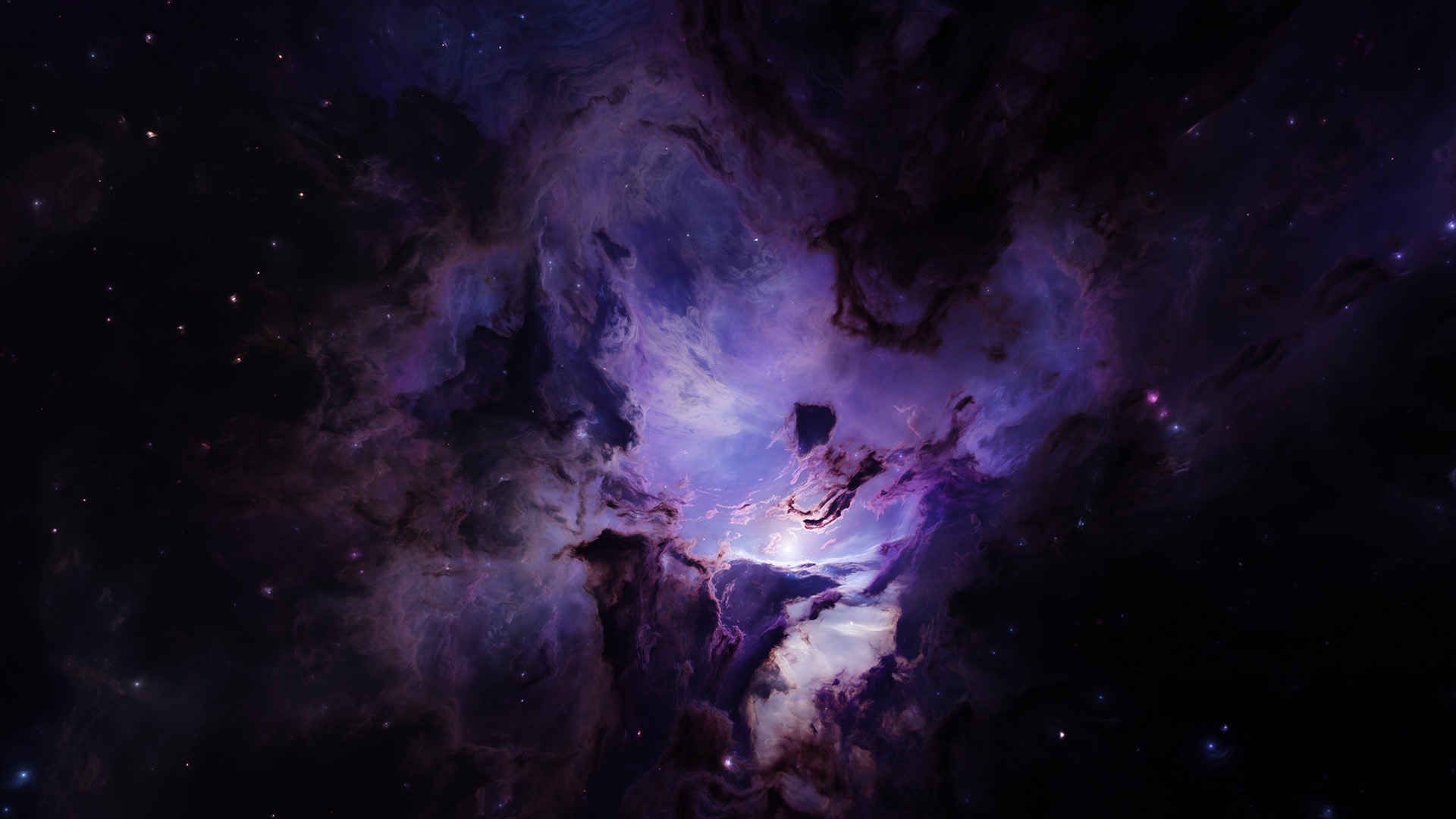
Space-time. The scale of the universe, and how much is still undiscovered.
What gets me is how small we are in it, and still made from it. We’re literally stardust. The oxygen we breathe, the carbon in our bodies, the calcium in our bones, and the iron in our blood were forged inside stars long before Earth existed. And on top of that, we’re mostly hydrogen and helium, the two simplest elements formed right after the Big Bang.
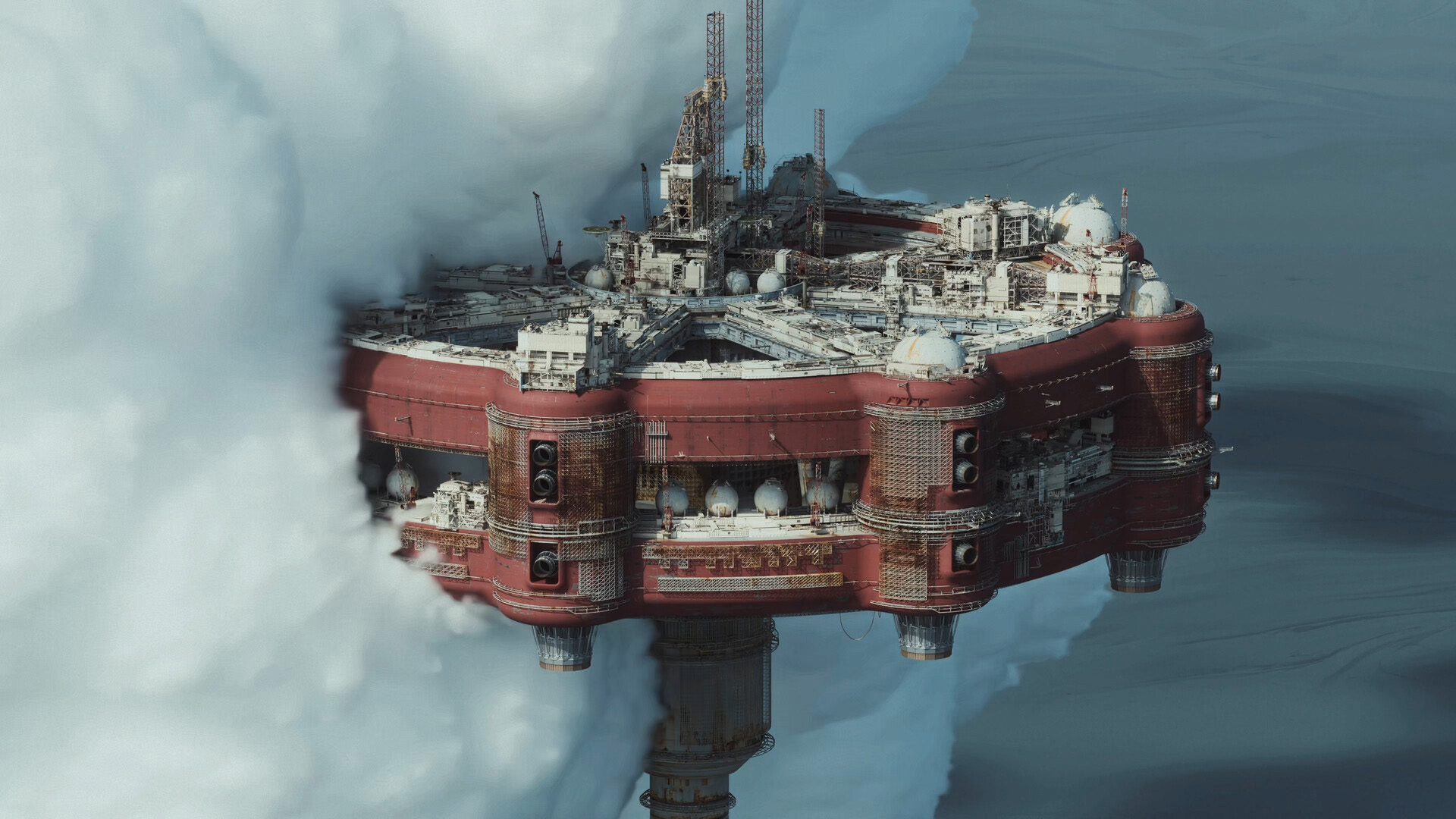
For this interview I prepared three animations to show how deep I’m into this. In the first one you’re seeing a computer generated simulation of a supermassive black hole. The black hole itself is invisible because beyond the event horizon, light can’t escape, so we only observe it through how it bends light and affects nearby matter.
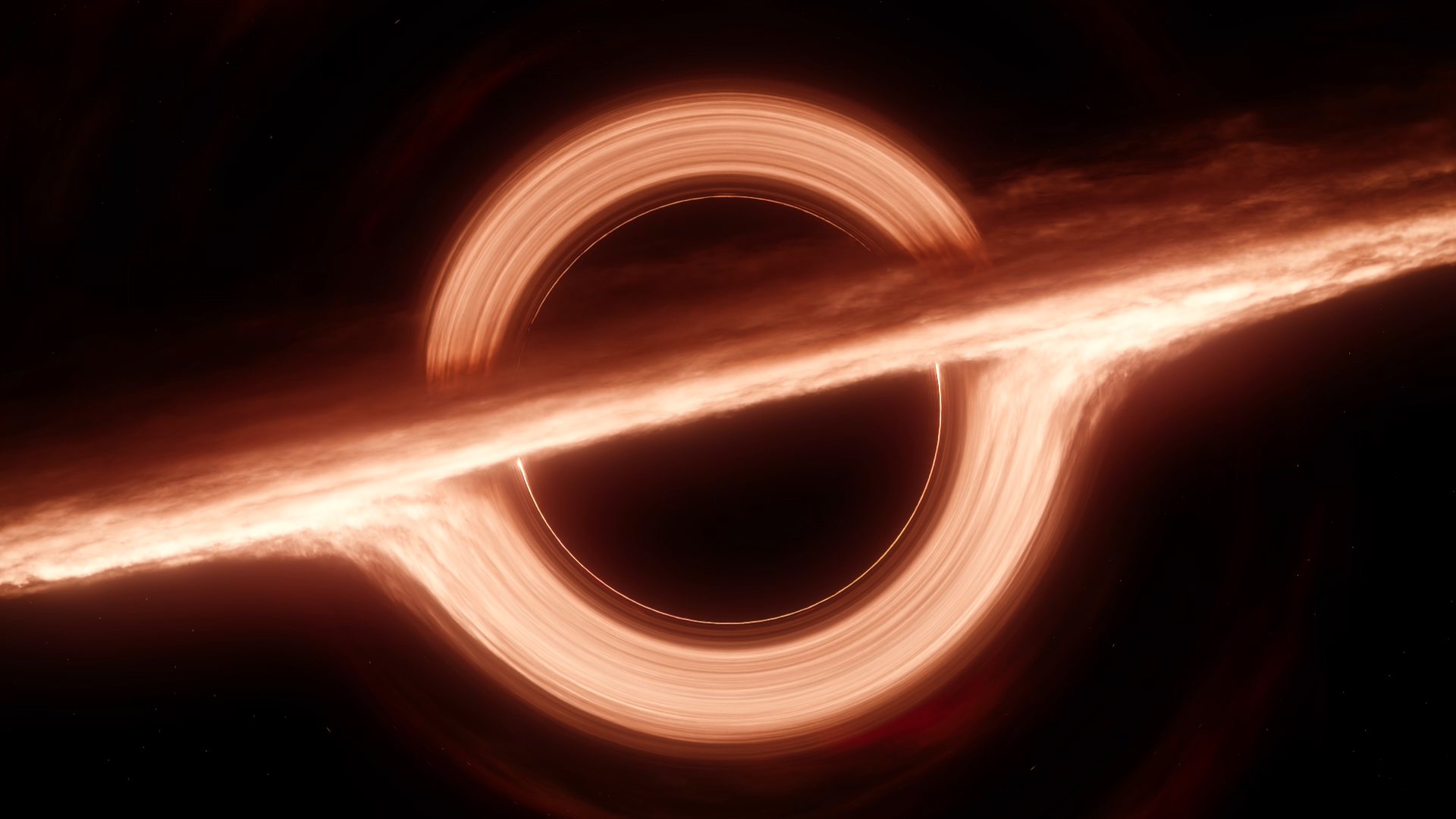
How it forms: a massive massive star is basically held up by the energy it produces. When that fuel runs out, the support disappears, gravity begins pulling inward, and the core of the dying star collapses into an extremely compact object. If it collapses far enough, a black hole forms. After that, it can grow by pulling in gas, dust, stars, and sometimes merging with other black holes.
Visually, you can spot a few key elements:
So overall, the short answer is theoretical physics.
I’m interested in how the world is shaped at the deepest level - how relativity affects space, time, and gravity, and how atoms and particles behave at smaller scales through quantum physics. Basically, the “hidden mechanics” that shape reality.
And lately, I’ve also been getting more into thermodynamics and neuroscience.
How do you ensure that you are pushing yourself creatively from one project to the next?
I try to stay open and intentional with every project. Creativity is a choice, and sometimes pushing yourself means doing the uncomfortable work instead of waiting for inspiration. That’s where discipline and work ethic matter, because you need a system you can rely on when motivation drops.
Outside of work, training helps a lot. The gym, running, and hobbies clear my head and reset my perspective so new ideas can come in.
People talk about “balance,” but I don’t think it’s some perfect state you reach. I just work with what I have, keep moving, and make the best out of it.
How do you challenge your own ideas, and how do you know when a piece is truly finished?
I don’t overthink challenging my ideas. They usually come naturally, and if they still feel strong after I sit with them for a bit, I commit and build on them.
My bigger challenge is perfectionism. I can easily fall into this loop of constant changes and polishing, and it starts taking more time than it’s worth. I’ve learned that this hurts me more than it helps, so I place clear deadlines on my work. When the time is up and it’s not perfect, I leave it as it is and save that improvement for the next piece.
The good part is that by the time I stop, I already know what was missing, so the next project usually levels up. And honestly, I don’t think a piece is ever truly “finished.” If you look back at older work, there will always be something you’d want to change.
You recently organized the Bulgarian edition of the Fight For Kindness exhibition. Honestly, an incredible initiative with beautiful work showcased there.
Do you believe artists have a responsibility beyond aesthetic expression?
Thank you for the kind words. I think every artist is free to use their voice however they want.
For me personally, I try to contribute to something bigger than myself and use my work to support the right causes and values.
If you have the opportunity to make something meaningful through what you create, why not take it.
Nako, would you consider yourself a critical person?
Yeah, I’d say I am, sometimes more than I’d like. I catch myself criticizing people, my environment, and the way the world works, and it can pull my mindset toward the negative.
I’m working on finding a healthier middle ground. I don’t think that critical side will ever fully disappear, but I can learn to manage it better and not let it cost me my peace or well-being.

How do you balance your time spent on personal work and client work?
I usually spend more time on personal work because that’s what keeps me energized. It’s where I can research, experiment, and build new skills.
I value personal work highly, and that actually improves my client work. If I neglect myself and only focus on client projects, I can’t bring my best. Personal work fuels my growth, and that growth directly translates into better results for clients.
When you shift from personal work to client work, how does that change your relationship with creativity?
I try to keep the line between personal and client work thin. Most of my portfolio is personal, so clients usually reach out for that same kind of work, which gives me more creative control from the start.
I’m also selective about who I work with and what they stand for. I always push for creative freedom, even though you rarely get 100% of it, so it becomes a negotiation and finding the right middle ground.
How you pitch and present your ideas matters a lot. Like it or not, understanding a bit of business is part of earning the creative freedom you want.
Where do you see the most potential for innovation in your artistic mediums?
I see the biggest potential for innovation in real-time graphics. Epic Games is pushing Unreal Engine forward fast, and it’s already being adopted well beyond games, across virtual production, motion design, architecture, VR, automotive HMI, and more. I genuinely think real-time will become the next industry standard.
On the tool side, I’d also bet on Houdini and Blender. Houdini is the gold standard for procedural workflows and simulations. Blender keeps getting stronger, has a huge community, and the progress with Geometry Nodes and performance is hard to ignore.
And then there’s AI. Tools for ideation and content generation such as Krea.ai can unlock new creative directions. But the bigger opportunity is going deeper into the tech itself: computer vision, machine learning, deep learning, and modern coding workflows. That’s where things are heading.
You seem very comfortable with technology in your work. How important is having the latest tools and where does taste and intention outweigh innovation?
Technology is important in my work, but I don’t chase the “latest” just because it’s new. I adopt tools when they’re stable and actually improve speed, quality, or flexibility. If it’s mostly hype, I ignore it.
Taste and intention outweigh innovation the moment the tool starts leading the piece instead of the idea. The best tech is almost invisible. It supports the concept, mood, and story without drawing attention to itself.
Innovation is the accelerator, but taste is the steering wheel.
We often speak with artists who struggle with their personal art journey.
What advice would you give someone struggling to make their work seen in such a saturated space?
First, accept that it’s saturated and stop trying to “outpost” everyone. The real advantage is clarity. Pick a lane, build a body of work that feels consistent, and make it obvious what you do in five seconds.
Second, treat visibility like a system. Discipline beats motivation. Post consistently, document your process, and present your work well.
Third, go deeper instead of chasing trends. One truly strong project beats ten forgettable ones.
And finally, reach out and build real relationships. Most opportunities come from trust, not algorithms.
And that’s already it Nako! Thanks so much for being a part of this! As always, we like to end the Artist Spotlight with a personal recommendation from the artist. Any good films, books, habits, or anything else you’d like to recommend to the reader?
Lately, when I feel mentally exhausted, I go for a run. It clears my head fast and brings me back into balance. It started casually, then turned into half-marathons and chasing better times each time. A full marathon is the next goal, and I’d love to work up to a triathlon too.
For books, I’d recommend Letting Go (David R. Hawkins), A Mind for Numbers (Barbara Oakley), and The Code Breaker (Walter Isaacson). Next on my list are The Brain: The Story of You (David Eagleman) and Determined - A Science of Life Without Free Will (Robert Sapolsky).
And for shows, anything with Neil deGrasse Tyson and Chuck Nice always keeps me curious and entertained. :)



Explore the Artist Spotlight


Receive a weekly briefing on what’s being built inside Blauw Films.
If you’re ready to start Dreaming in Blauw[1], leave your details below:
By entering your email, you agree to receive a curated newsletter from Blauw Films.
[1]: Dreams of Blauw are any form of crystallised thought based on honest expression. Sometimes they linger a shade of blue in your after-image.