Leonardo Verkoelen
December 23, 2025




Hello Paul! It’s amazing to have you here on our Artist Spotlight.
Thank you!
Could you please introduce yourself?
Sure! My name is Paul Chadeisson. I’m a French artist working as a concept artist for films and video games, and more recently, I’ve been directing films in my free time.
You’ve worked on incredible titles like Foundation, Dune: Part Two, Alien: Romulus and Cyberpunk 2077. How did your experience in the industry shape your approach to concept art?
Working with the teams behind all these projects has taught me a great deal. These people are among the best in their field, and some of the most talented artists of this generation. Each person brings a different approach, and being surrounded by such gifted individuals, with their own unique styles and visions, is incredibly inspiring. I feel like I absorb and learn something from each of them, and the same in return. It encourages me to explore new ideas, discover new references, and constantly look for fresh sources of inspiration.
Most definitely. Having worked in both the video game and film industries, how do you see the landscape of concept art evolving in these fields?
That’s a very interesting question, and I think it’s closely related to the rise of AI. Today, AI can already generate videos or game prototypes, but concept art remains essential, especially in areas where AI still struggles. Creating original IP, for example, is not something AI does easily. These tools can be extremely efficient in specific areas, but they don’t always help you reach what you’re truly looking for. Drawing, and collaborating with artists who have a unique style and vision, remains key. As projects become more similar to existing content or established styles, they risk becoming irrelevant, because that’s exactly where AI excels. It has an enormous amount of existing material to train on.
That's a very good point. To innovate requires fresh and new ideas from creative minds.
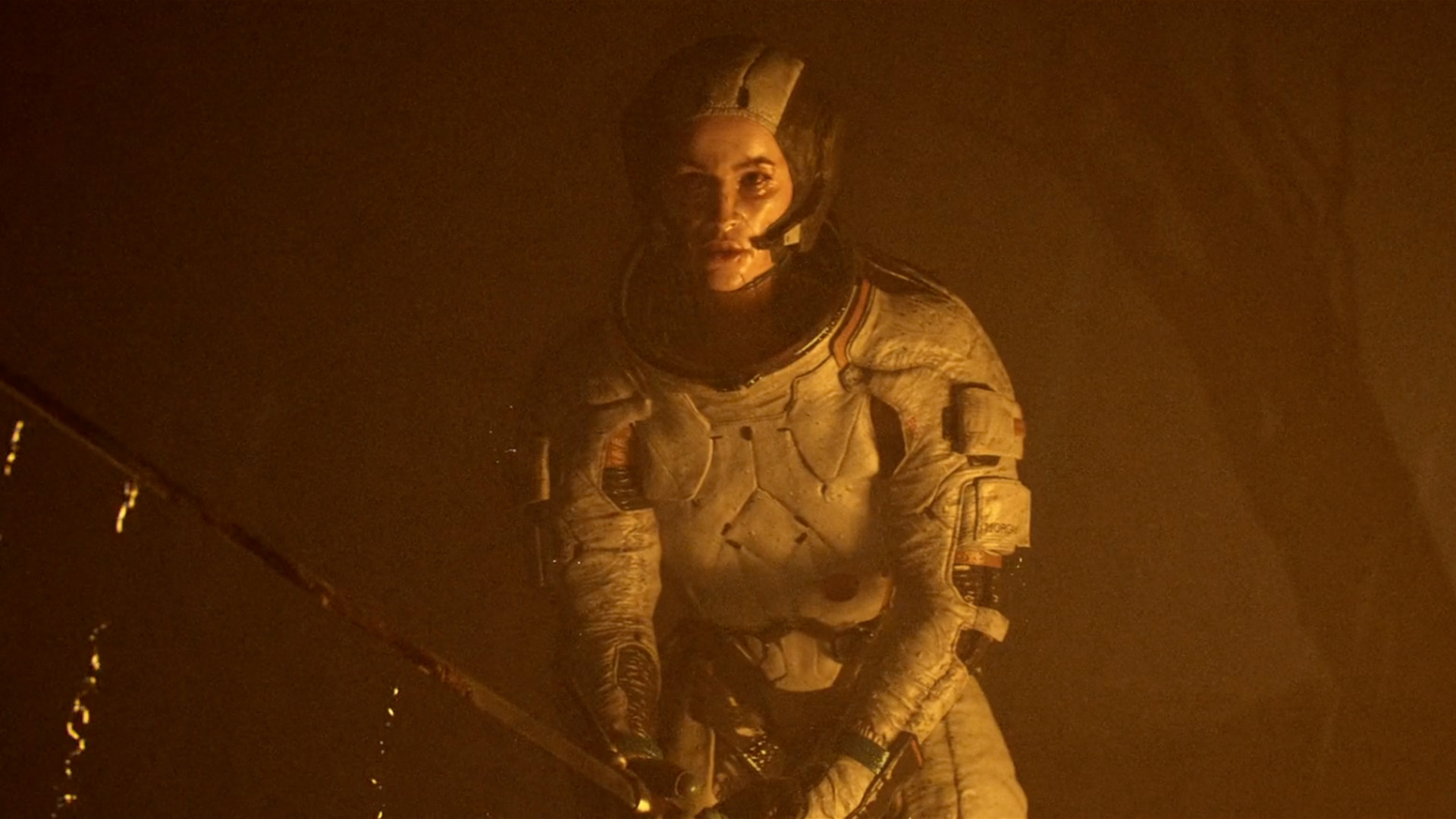
I’d love to talk about your original IP and its short films SOLSTICE-5 and SOLSTICE-5: Forgotten Archives. First of all, they are truly wonderful short films, beautifully executed, and I would love to see more of this universe!
Thank you!!
Can you tell us a bit about how the SOLSTICE-5 IP came to be? When did the idea first come to you and how did you approach bringing it to life?
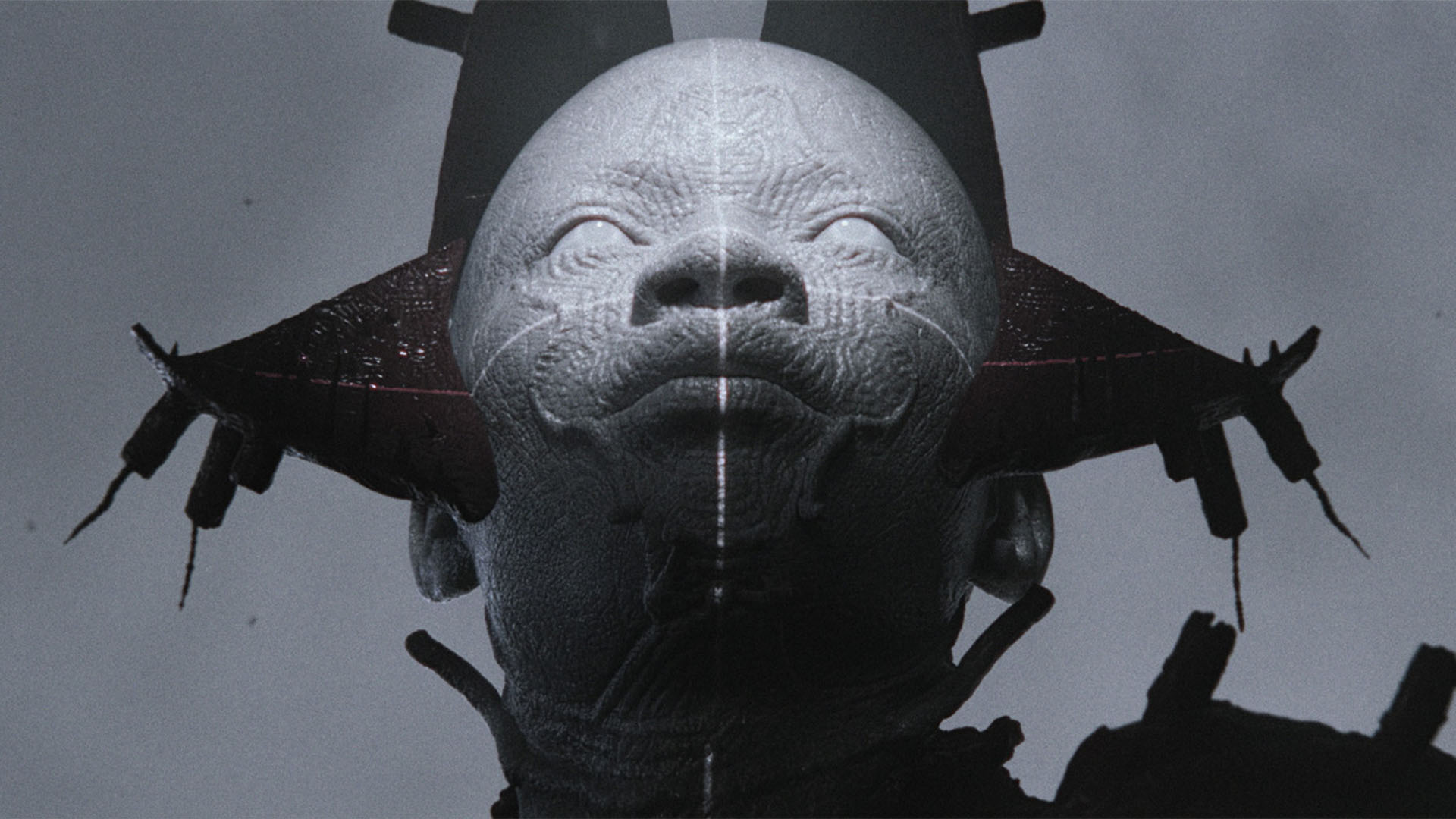
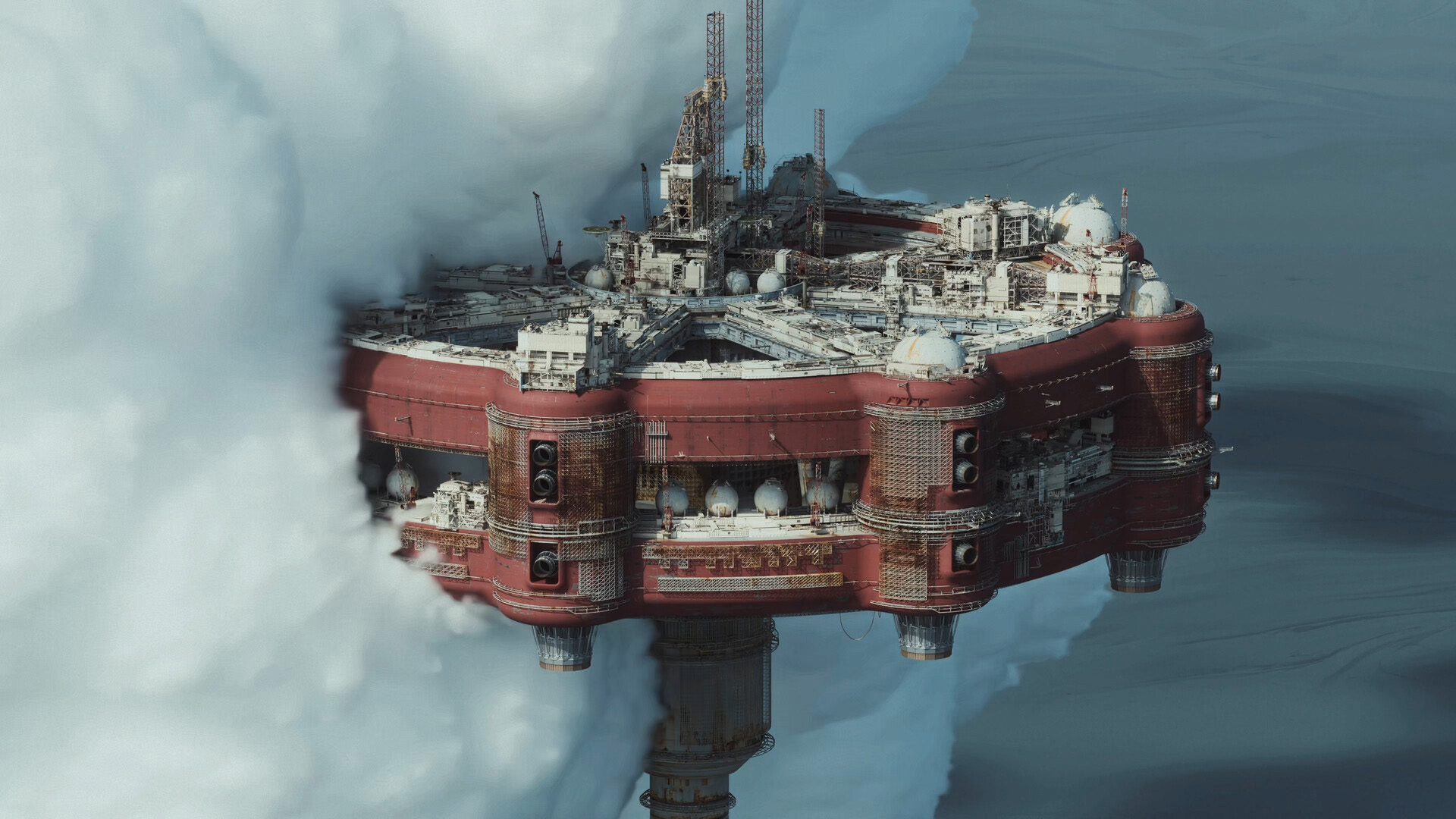
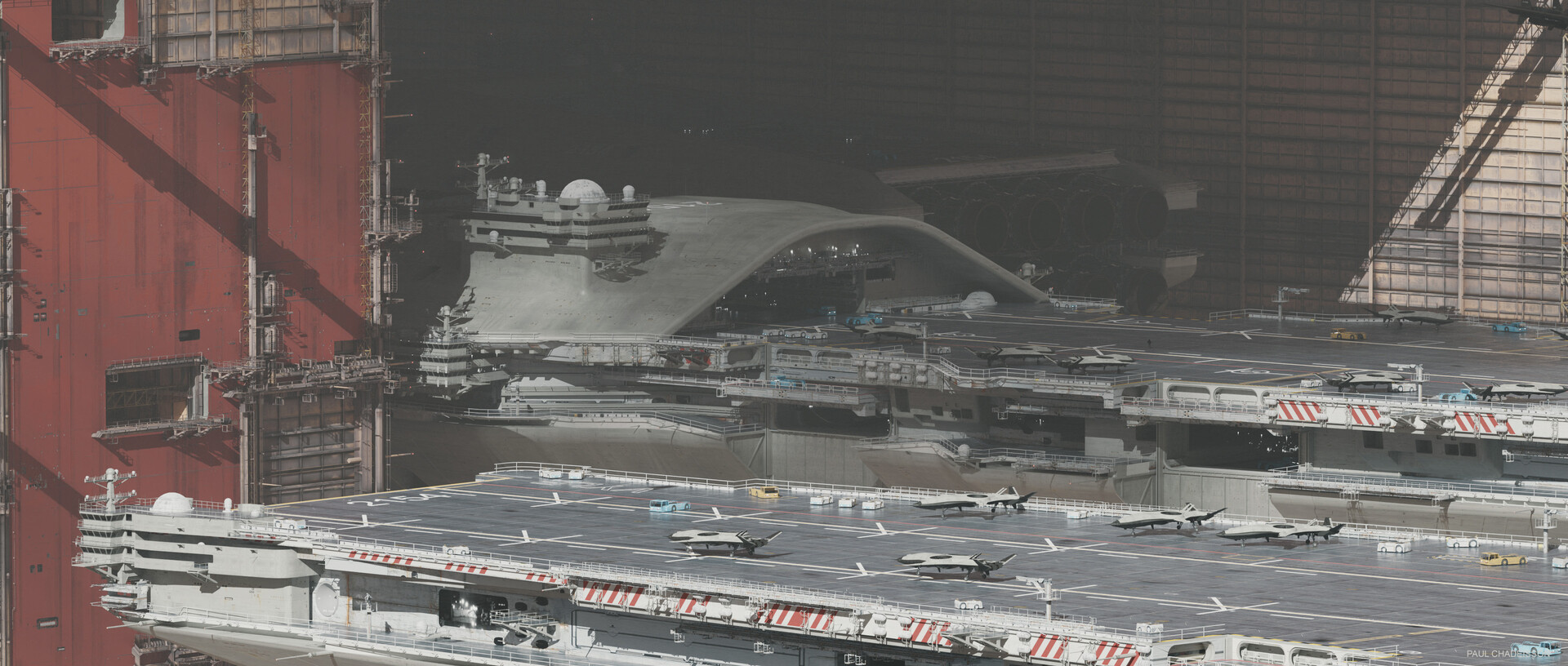
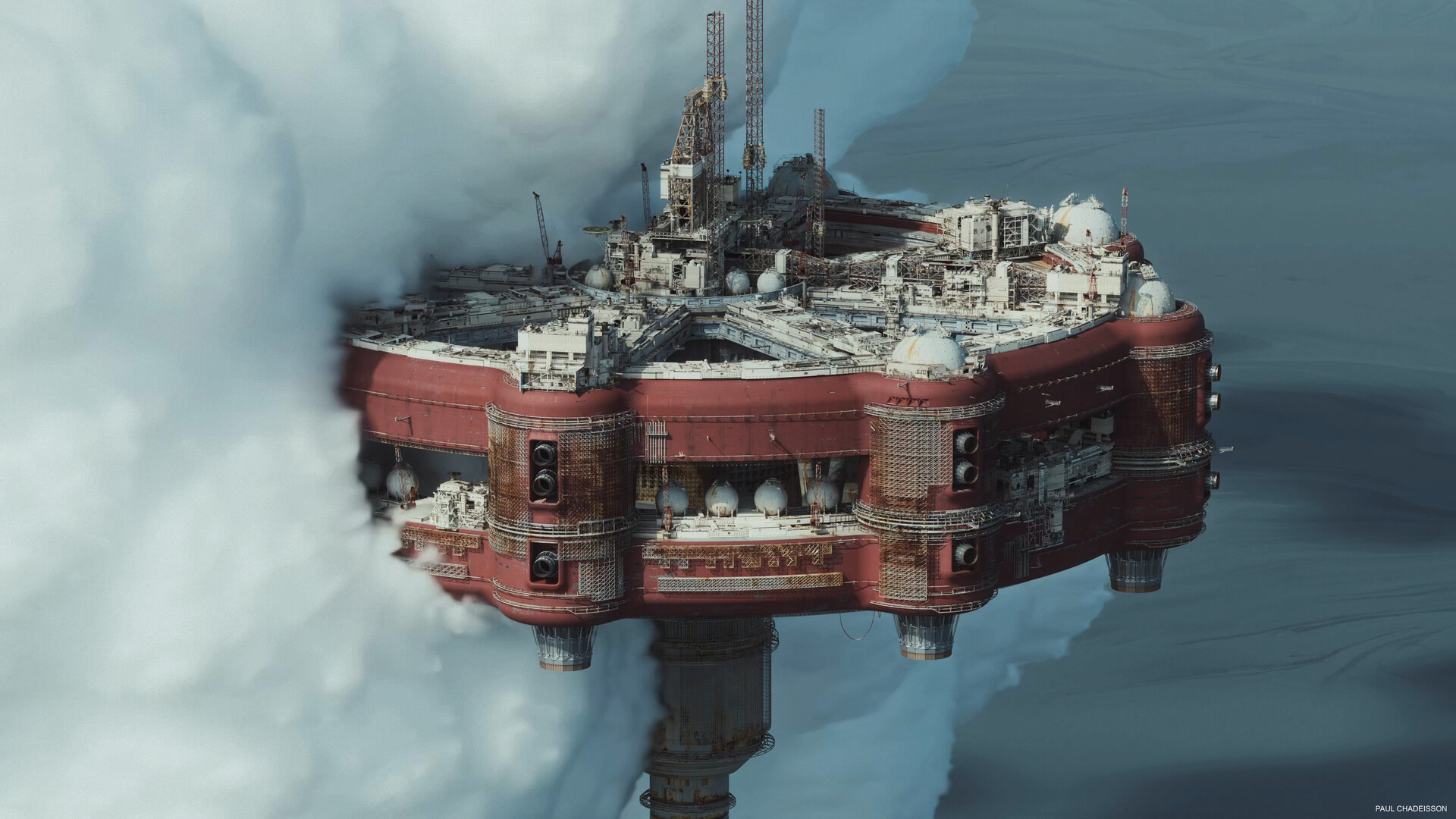
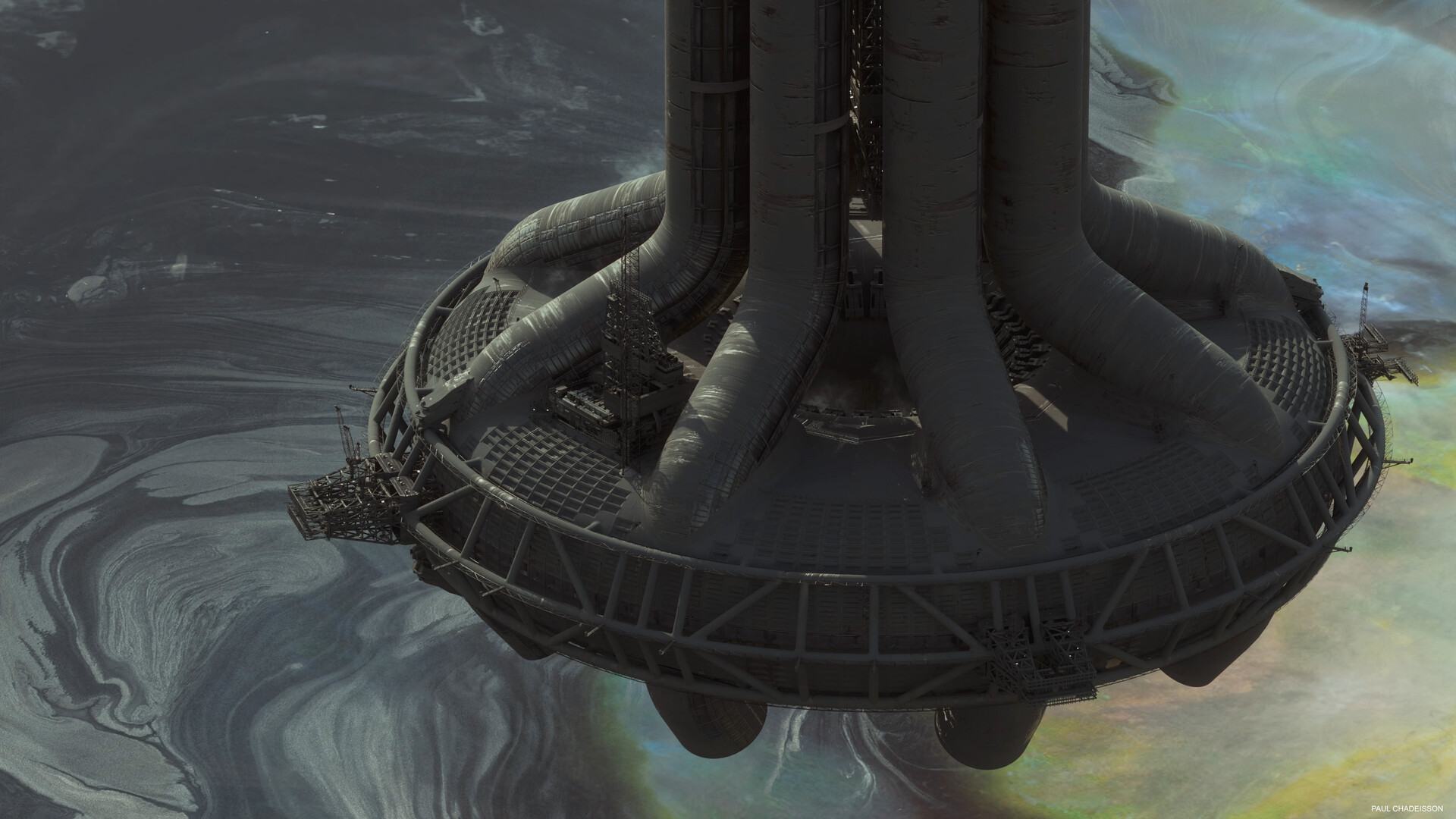
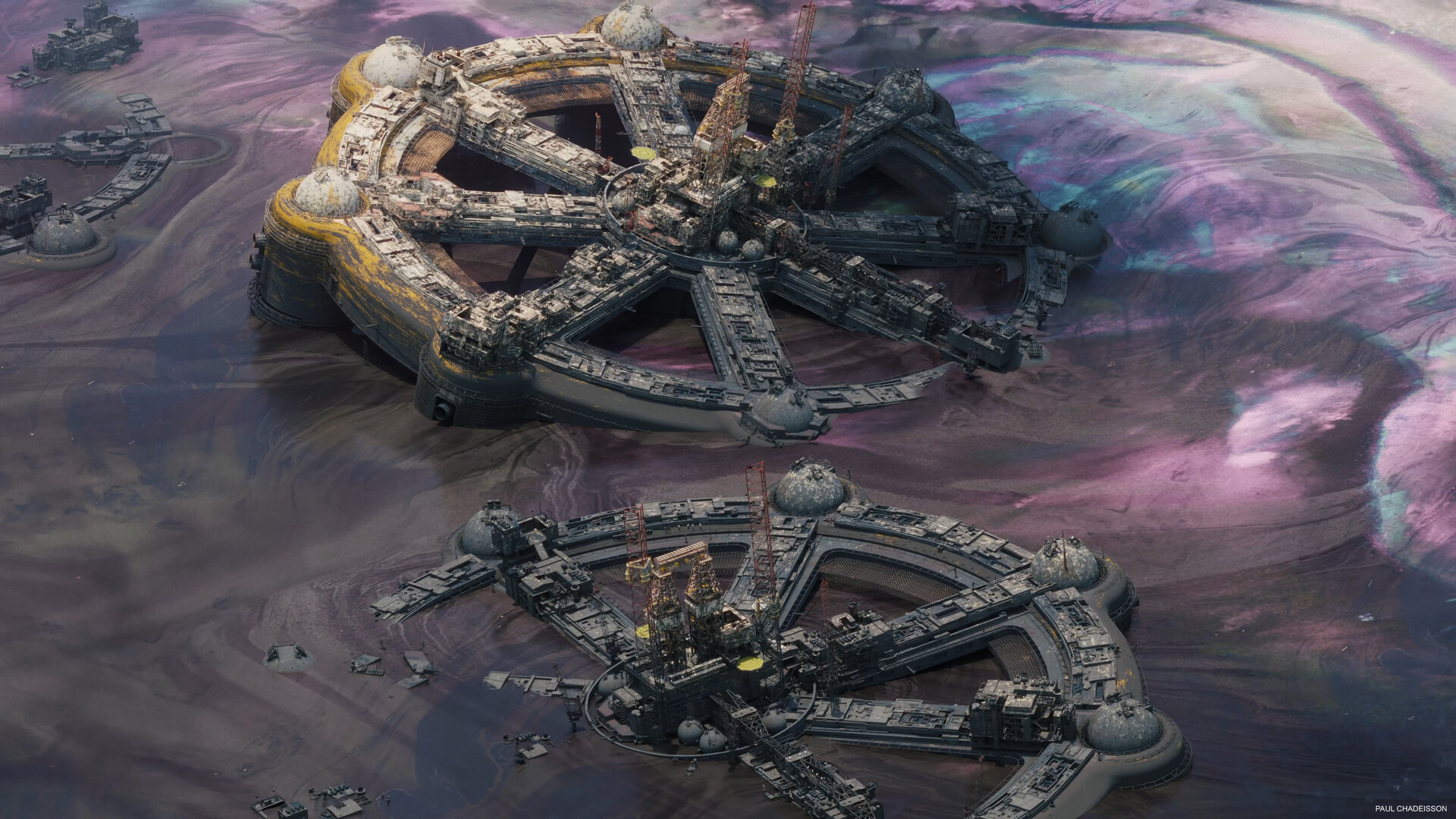
This project is closely connected to my first short film, Migrants. I really loved that experience and wanted to recreate it. I realized I could develop other film ideas based on illustrations I had already made—these aircraft carriers were one of them, and that’s the idea I decided to pursue. A few years passed between the two projects, but learning Blender made these films possible. It’s very easy to use and incredibly powerful. I initially started with a single animated shot, and after a day or two, it looked promising enough to push further. After a couple of months, I had around 40% of the film completed, and it became clear that it could truly become another full film.
Oh that's really interesting to hear. I love Migrants. What was your decision to use Blender over other tools, and what specific features of Blender did you find essential in creating this project?
Creating everything within a single tool is a huge time-saver, from asset creation and camera placement to animation, texturing, lighting, mood, and final rendering. It also handles volumetric fog extremely well, which was a limitation in the software I used previously.
Yes, I can tell you work incredibly economically. And it maintains creative flow.
The SOLSTICE-5 universe is filled with striking color harmonies, do you have a tendency to gravitate toward certain color palettes when creating futuristic environments?
If that’s the case, it’s not something I do consciously. That said, I do enjoy using saturated colors for industrial structures. I try to create atmospheres where the colors of each object remain readable. Sometimes the overall mood washes out individual colors and makes things more interesting through their silhouettes; other times, it’s the colors and materials of an object that give it its appeal. Because of this, I tend to favor daytime lighting setups.
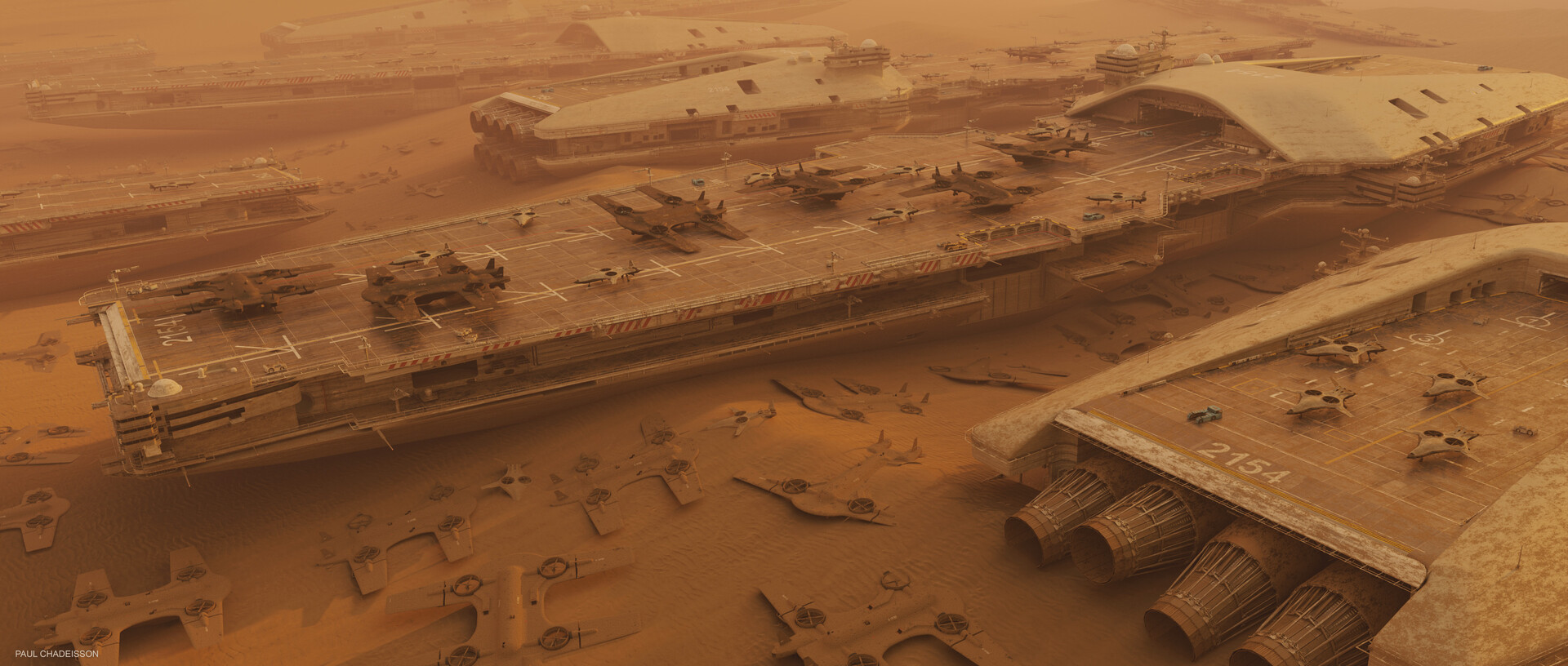
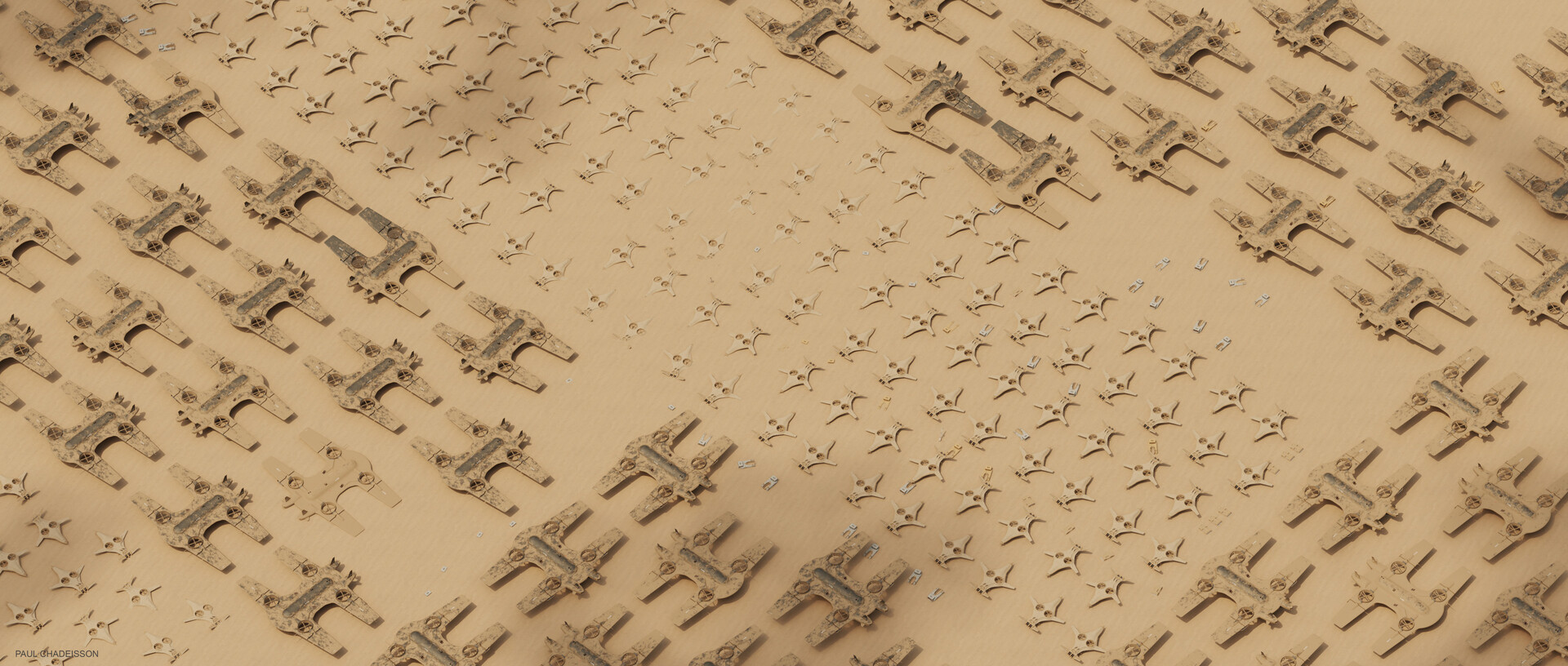
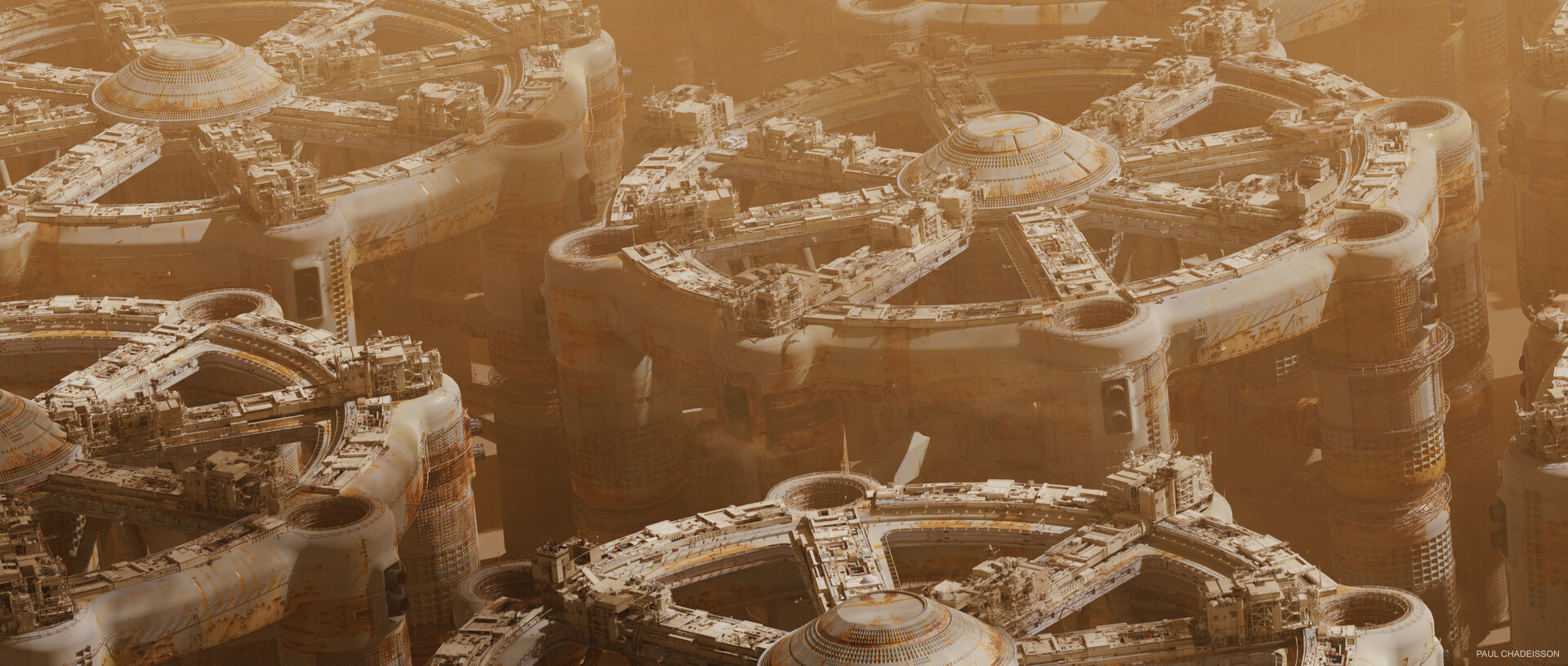
I have to say that your daytime setups carry a great sense of naturalism. Even when the subject matter itself is anything but naturalistic. This contrast gives lots of richness to the images.
From an artistic and technical perspective, what were the challenges of working with assets and scenes of such immense scale? How did you ensure that the scale would read well to the viewer?
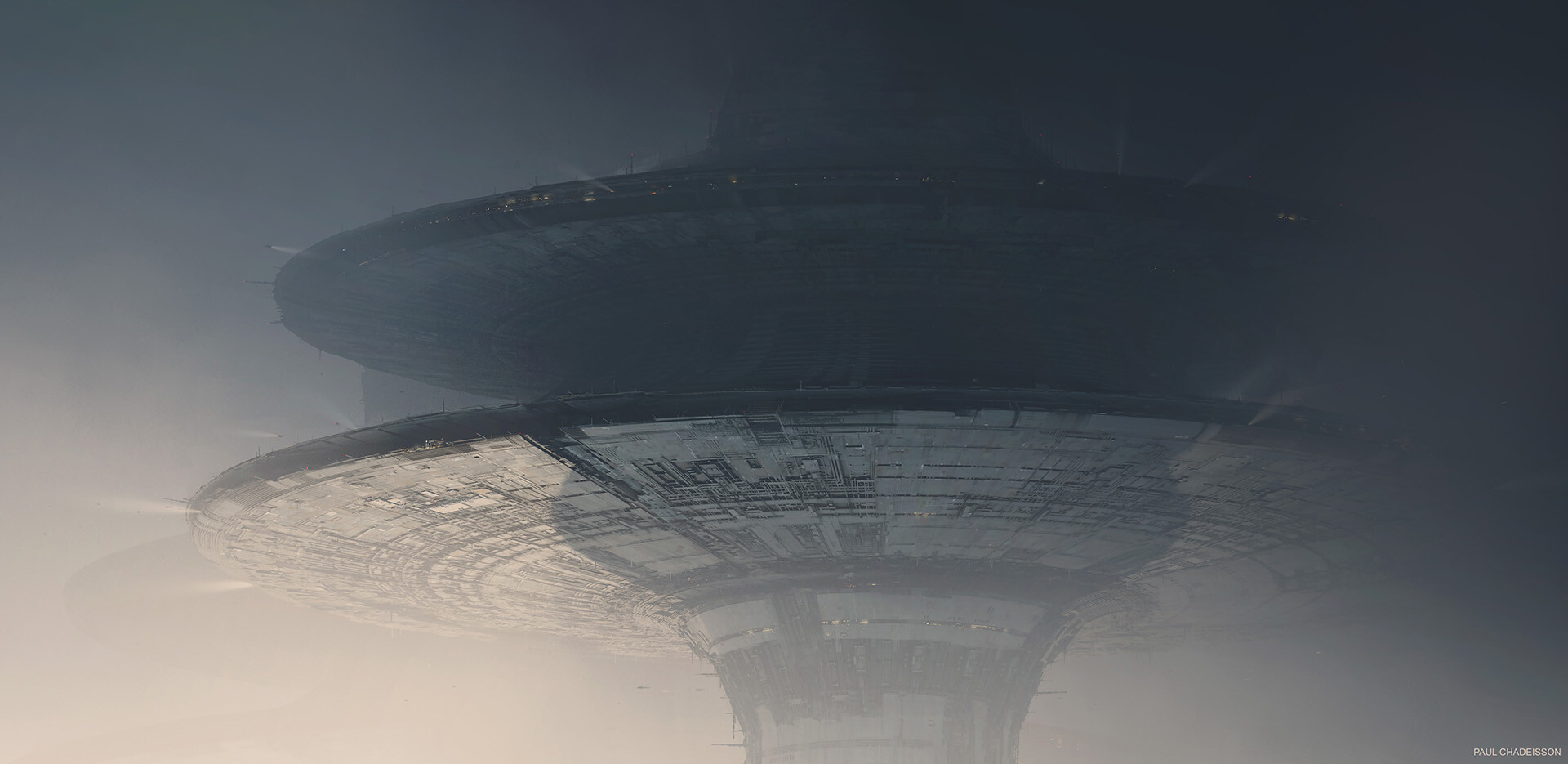
The most important part is having fun with large shapes and creating a strong, readable silhouette. Once I’m happy with that, it becomes about selling the sense of scale through details and fine the appropriate smaller objects scale. I rely heavily on instanced objects, which allows me to duplicate elements efficiently, otherwise, the scene would quickly become too heavy to manage.
I saw that for SOLSTICE-5: Forgotten Archives you collaborated with a variety of talent from writers to visual effects. How was the experience managing the team and getting the results you were after?
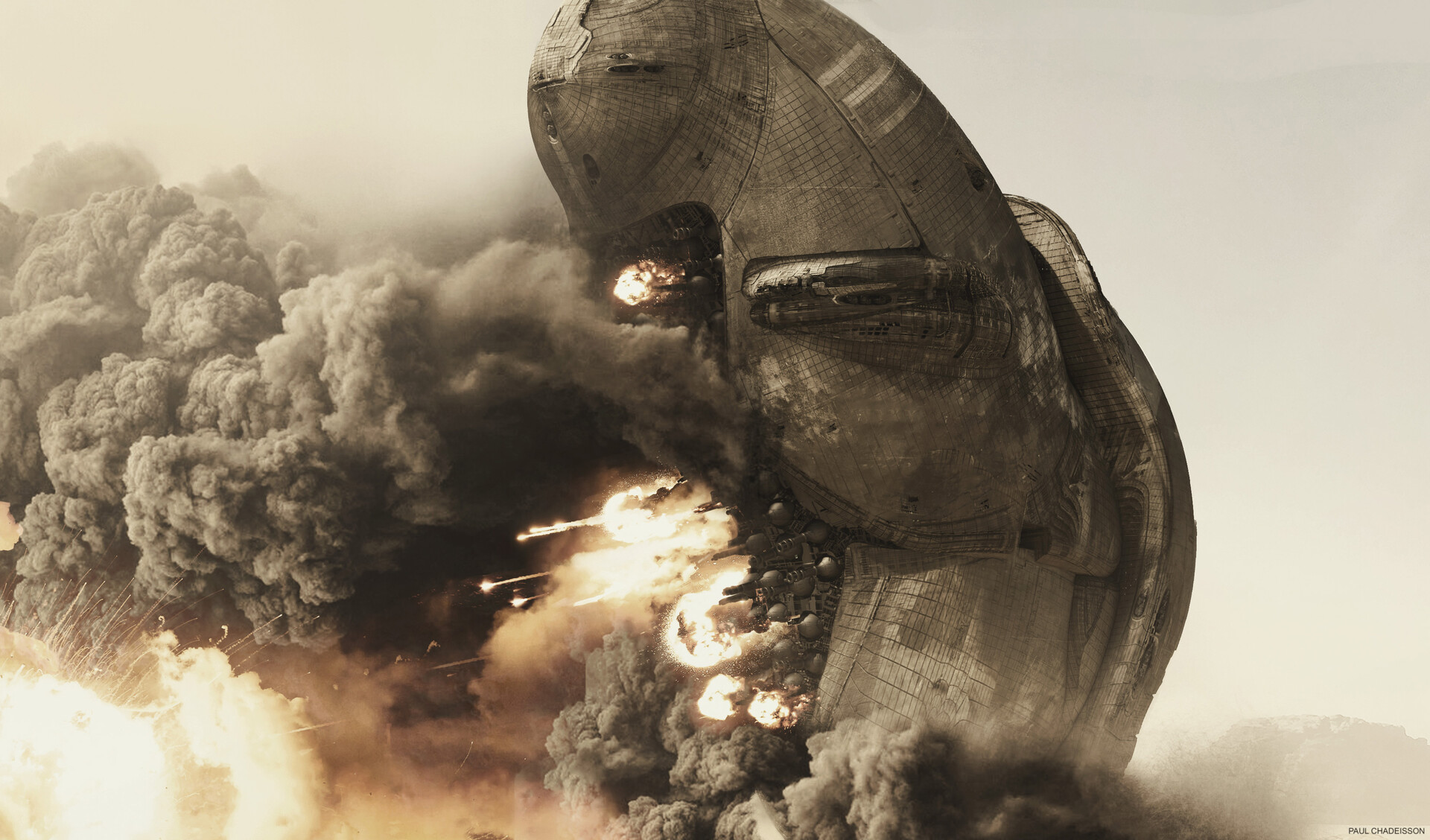
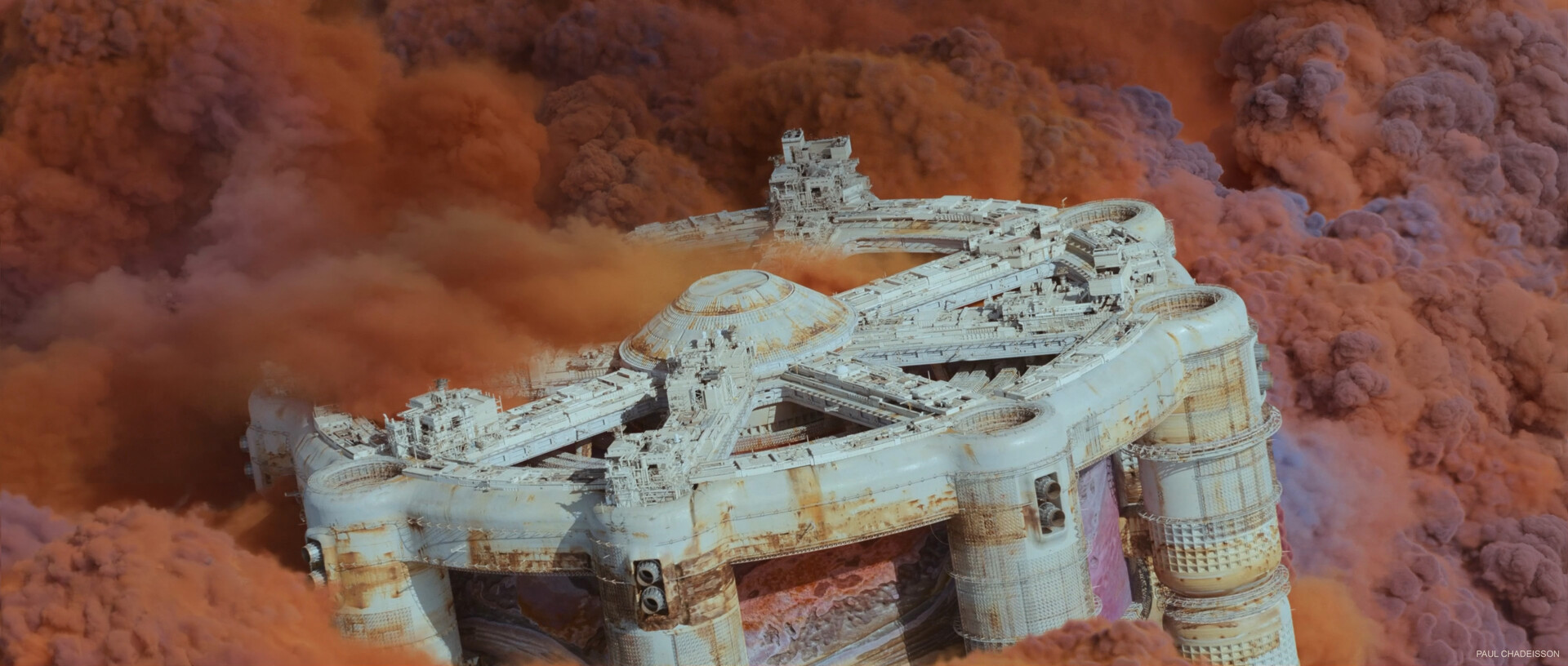
Working with other people was a huge relief for me. Making a film requires so many different skills, writing, art, storyboarding, editing, music, and more. With this second film, my goal was to achieve everything I had done on the previous one, but faster and at a higher level of quality. I had been fairly cautious when it came to using VDBs, such as explosions and large volumes of smoke, as well as integrating characters into my scenes. This time, I was able to focus much more on those areas where I felt I was lacking. Ultimately, it’s about finding the right balance between spending lot of time learning new tools and software, and being able to work faster, reaching the final result without technical slowdowns.
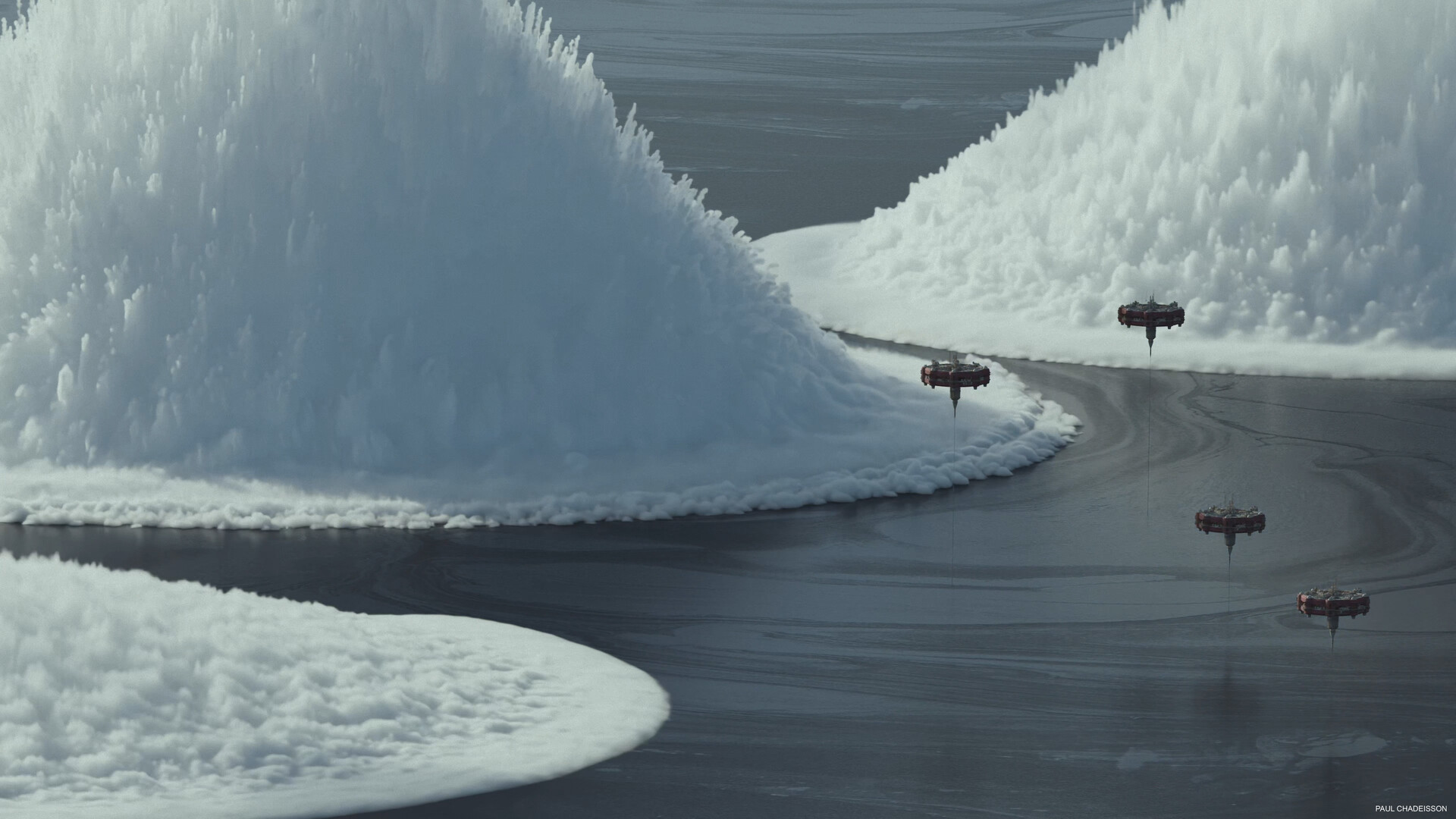
That's wonderful. Each of these areas were essential to elevating the film to the next level.
Are you quite particular about the people you like to work with? Is selective collaboration important in your process?
You don’t change a team that works 🙂 . I wanted to collaborate again with Lambert Grant, who co-wrote the project with me. This time, I also needed to surround myself with more talent. I found many of these collaborators by searching online for the skills I was looking for, and friends also introduced me to artists, such as Émile Vallée, the editor.
Did you encounter any interesting issues while working on this?
Writing required far more work than I initially expected, and it took me some time to fully realize that. I brought in Stéphane Beauverger to help us, as I had already worked with him before. Some parts of the project naturally move faster than others, and it’s not always easy to maintain the same level of focus across every aspect of a film. That’s precisely why collaborating with other talented people helps ensure a consistently high level of quality in every area.
Do you have plans with the SOLSTICE-5 IP moving forward? And what are some of the obstacles you are currently facing?
Yes, I do have a few ideas for what comes next. I’m also working with a film studio to adapt the project, and I’ll be able to share more details as soon as I can!
Oh that sounds very promising! Looking forward, where do you see your creative journey taking you in the next five years?
I honestly have no clear idea yet. For now, I’m really enjoying the process of making films and creating art without a predefined plan. I like allowing projects to evolve organically, and then looking back afterward to understand where they’ve led me and what direction they naturally take.
What advice would you give to someone thinking of a career in concept art? There is always a new generation taking their first steps into this adventure.
Drawing and sculpting feel fundamental to me when it comes to learning. No matter where technology takes us, these core skills remain essential for building a strong career in this field. They help develop an understanding of form, volume, proportion, and space, and provide a solid foundation on which any digital tool can build.
And that’s it! Thank you Paul for being a part of this! As always, we like to end every Artist Spotlight with a personal recommendation from the artist. Any good films, books, habits, or anything else you’d like to recommend to the reader?
The making of from Lord of the Rings has been amazing to me recently, more than 20 hours of documentary!


Explore the Artist Spotlight


Receive a weekly briefing on what’s being built inside Blauw Films.
If you’re ready to start Dreaming in Blauw[1], leave your details below:
By entering your email, you agree to receive a curated newsletter from Blauw Films.
[1]: Dreams of Blauw are any form of crystallised thought based on honest expression. Sometimes they linger a shade of blue in your after-image.