


The Creative Process of the Sleep Paralysis Demons: From Script to Screen
Designing the archetypes of Apple Rot’s uncanny intruders

Apple Rot


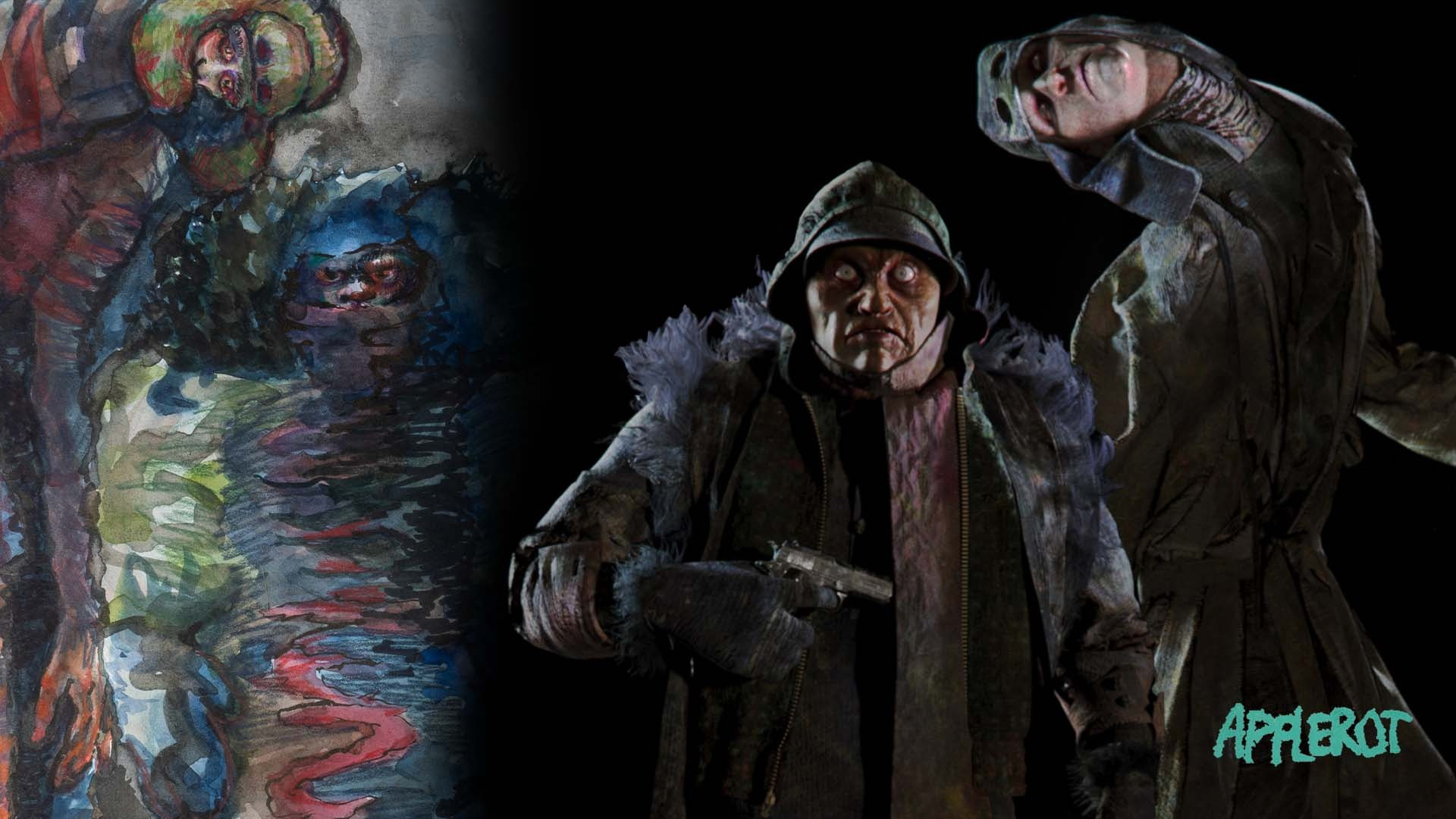


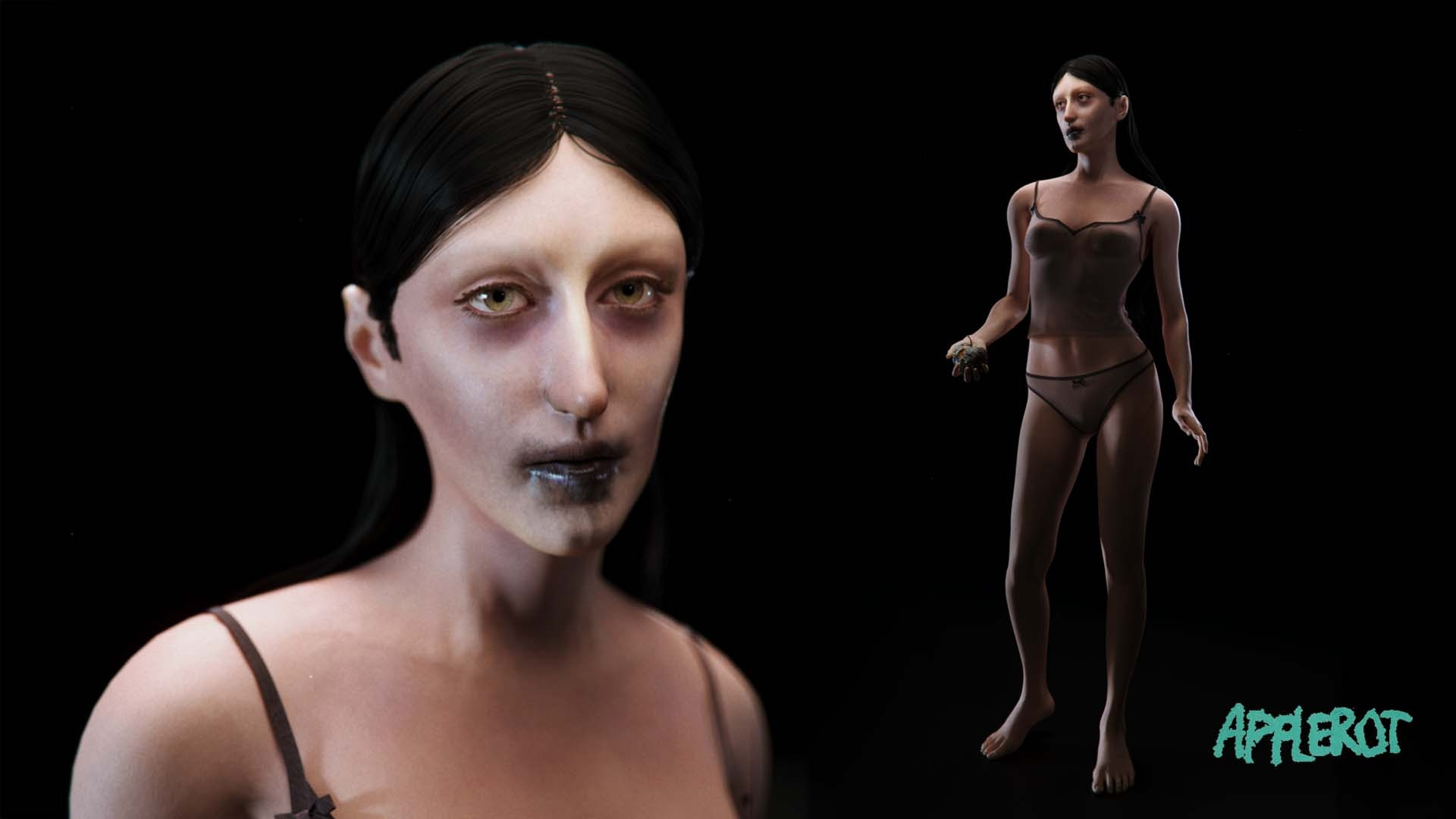
Apple Rot is the first independently produced 3D animated horror short film from Blauw Films. The Apple Rot horror screenplay was written in the summer of 2022, after a bad dream and an uncanny case of sleep paralysis.

The film itself was executed in the fall of 2025. In the span of six to seven weeks with a small crew and limited resources, we managed to translate a nightmare to the screen.
In this blog I’ll outline the design thinking behind the two Sleep Paralysis Demons in Apple Rot: Sad Tall and Short Angry. How did these two characters evolve from script, to concept art and finally animated 3D characters in our horror short, Apple Rot.
I’ll focus on design theory here, but you can explore our Technical 3D Pipeline breakdown at this link.
Why One Demon Wasn’t Enough
Since the Apple Rot script matches a real dream-sequence, the presence of two demons was an organic, nightmarish choice rather than a narrative one. In that dream, one figure had been looming, sad and regretful. The other one had been intimidating, vindictive and angry.
We used these horror archetypes to inform the design of two characters. We hoped to achieve an additional layer of intimidation, helped by the fact that there’s two of them staring down at you.

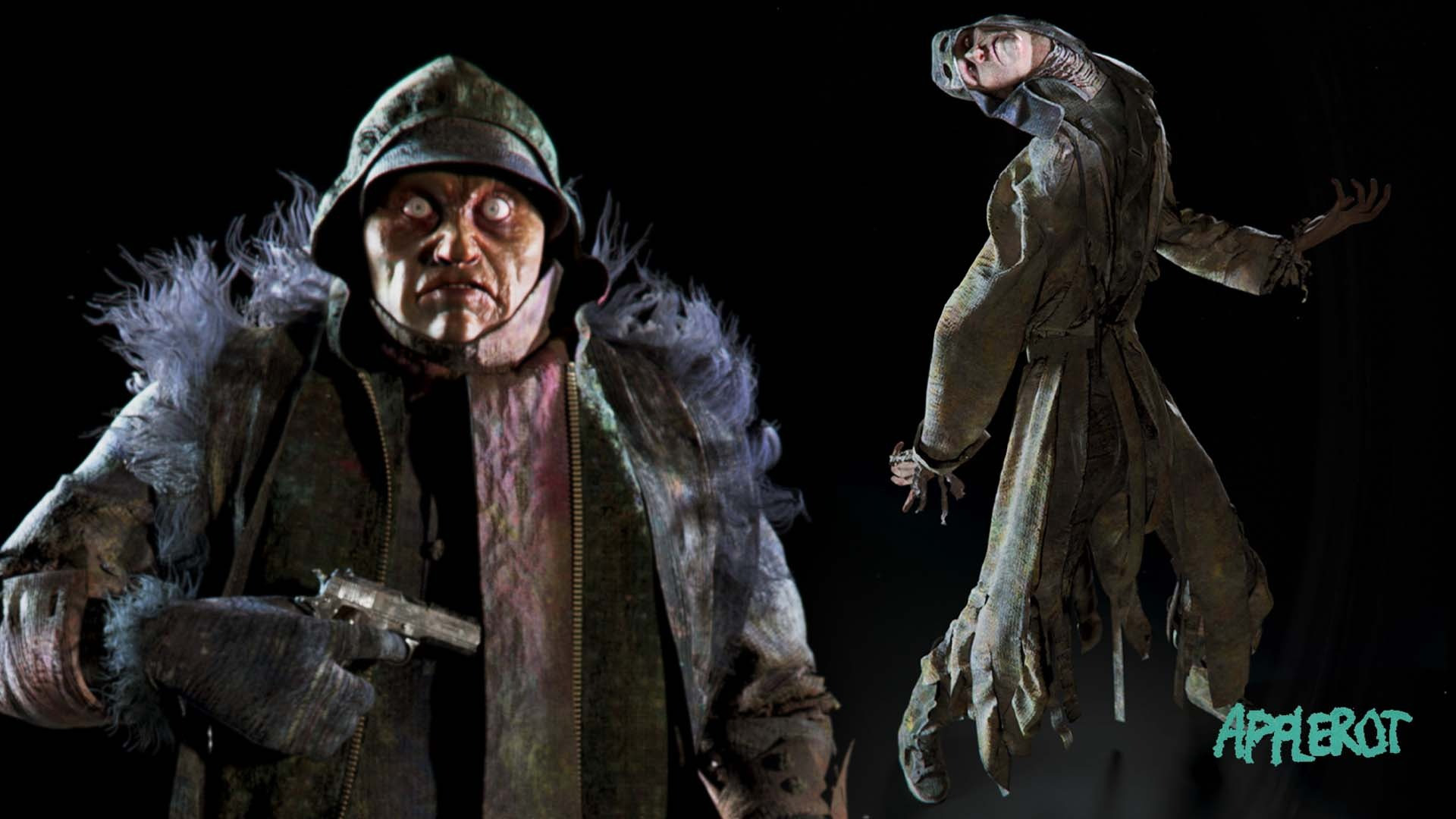
Their silhouettes had to be “hard to describe”. Covered in clothes from head to toe, layered and undistinguishable. But they had to remain humanoid, too. And feel like burglars: uninvited, unwanted, intimidating and intruding uncanny strangers.
After a couple of sketchy explorations and iterations, the ink drawing below ended up most closely capturing the vision we were after.
We never wanted the characters to end up looking like just a pile of clothes. They needed distinct silhouettes to move and articulate properly. The idea was to layer a selection of oddly shaped items. Layers which catch unexpected shadows and distort the silhouette; to enhance that unfamiliar, uncanny feeling of the characters.


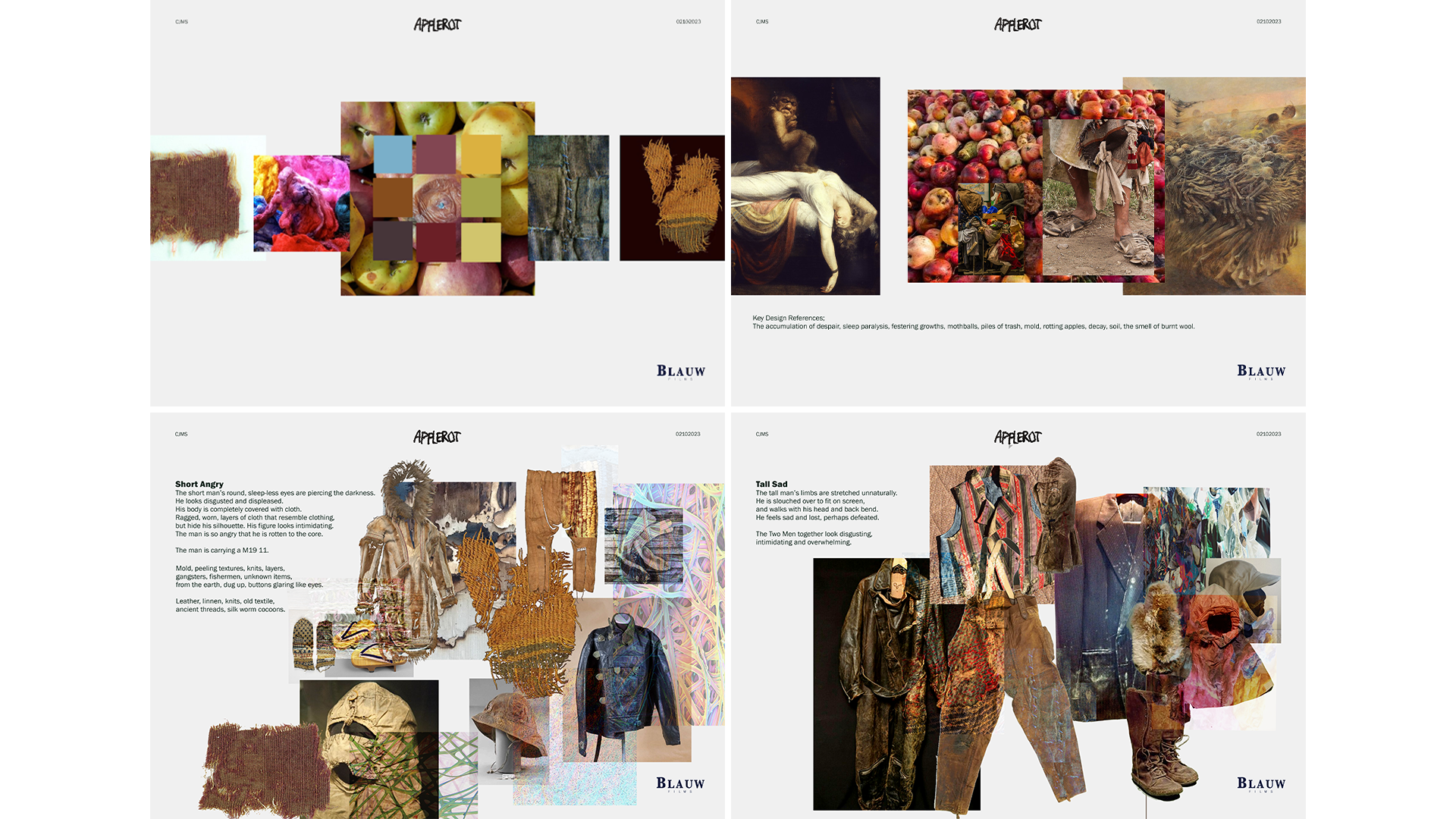
Additionally to the character sketches I made moodboards, capturing early ideas for their clothes in images and words. Moodboards are useful to keep track of essential ideas, and as a communication tool with other artists on the team.
Ab Wienk joined the team and worked on his vision of the demonic duo. We explored the characters through multiple iterations of concept and character art.
One piece of art inspired the next, and this is how Sad Tall and Short Angry organically took shape.

To prepare for the digital texturing process, I collected materials and created texture swatches.
Exploring the aesthetics of the Apple Rot world through physical materials was a great way to expand the design language. This created a material library of unconventional shapes, colors, and textures that expanded our design language.
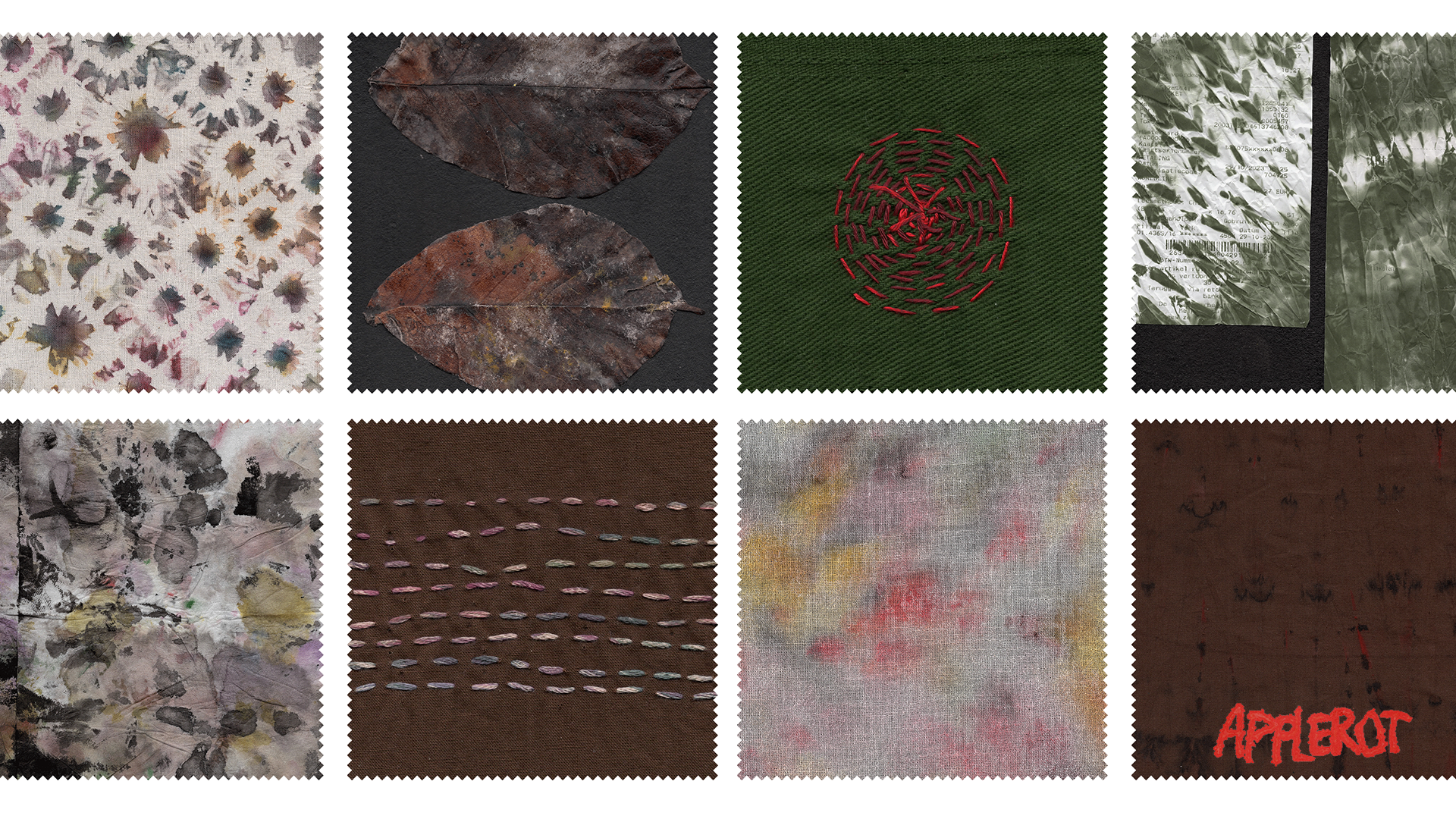
These were of great help to us and were used to texture both the characters and their clothes.
Designing Sad Tall: The Weight of Regret
Sad Tall was once a living, breathing person of flesh and blood. But that was a long time ago. The Rot has consumed him. His soul is tied to the Genesis Orchard and he is forced to find more souls, to feed to the Orchard.
Sad Tall’s character silhouette is uncannily elongated, deformed by the weight of regret. As the concept design phase went on, Sad Tall’s limbs stretched further and further.

Costume design references for both the demons consisted of mold, old leather, patchwork clothes and excavated textiles. I found a lot of references in the digital libraries of museums; arctic explorer’s knit mittens, eccentric medieval headwear, deteriorating pieces of cloth and patched-up robes.
The hat, the coat and the boots; the general gist of the design didn’t change too much from Ab’s concept art. One thing that was very important to me, however, was that Sad Tall had to look deflated. The shoulders are drooped and his silhouette is long, dragging and dreary.

Since these two demonic characters were once human, I wanted to dress them in human clothes. I imagined that the clothes had become part of their body over the years. Mushed and molded together into a pile of rotten materials. Perhaps these clothes still contain clues about the people they once used to be.

One key element of Sad Tall’s animation was already decided. When entering the bedroom he’d have to bend his body in unnatural ways to fit inside the room. His design is made up out of flaps, strings and ribbons that drape, slide and fall as Sad Tall contorts his body.
Designing Short Angry: The Silhouette of Aggression
No one knows how long the Rot has consumed Short Angry, but his corruption runs deeper than Sad Tall’s.

One of Short Angry’s main design requirements was that he had to look like a gangster. Which likely contextualizes the fedora Ab chose for his art.
Similar as with Sad Tall’s design, all items would have to be recognisable but almost indescribable. Short Angry also had to act as Sad Tall’s brawly counterweight.
Much of Short Angry’s intimidating nature depended on his facial features and gleaming eyes. If anything, his costume had to act as a support to make his face the focal point.

Short Angry’s jacket with purple fur creates a broad-shouldered silhouette. The stringy fur is reminiscent of hairy mold. Those irregular shapes framing his face and hands help to sell the feeling of disordered, unpredictable realism.

Short Angry’s overall shape language isn’t very sharp. Bulbous shapes can end up feeling more comedic, as opposed to scary pointy shapes. But the stringy fur surrounds his face with speared, intimidating shapes.

Short Angry’s neck disappears behind the scarf and two hats. This, in combination with the fur, sells the core message that Short Angry is some sort of demonic gangster or burglar. Someone who’s here to collect a debt.
Bringing the Duo into the 3D World

The process of translating these two characters into animatable, 3D characters for the film was a journey on its own. You can find the technical breakdown for Sad Tall and Short Angry right here.
This blog shows the process behind sculpting the characters, rigging them for animation, creating the costumes and texturing the materials. All of this was done within the relatively tight production timeframe of six to seven weeks. So if you’re a digital artist yourself and are interested to learn how we pulled that off, we explain it all in that blog.
Additionally, if you’re looking for a complete oversight of the entire production process - from creative to execution - I recommend the extensive Apple Rot Case Study.
Conclusion
Experience Apple Rot right here, on blauwfilms.com.
We are extremely proud of how this nightmare came to life, and are even prouder to be able to share every moment of the process with you.


Reading List
References






%20by%20Ivan%20Aivazovsky.jpg)




0 Comments