


The Creative Process of Developing Eve: From Script to Screen
The Journey behind Apple Rot’s Character Design

Apple Rot




Apple Rot is the first independently produced 3D animated horror short film from Blauw Films.
The Apple Rot script was written in the summer of 2022, after a bad dream and an uncanny case of sleep paralysis. The film itself was executed in the fall of 2025. In the span of six to seven weeks with a small crew and limited resources, we managed to translate a nightmare to the screen.
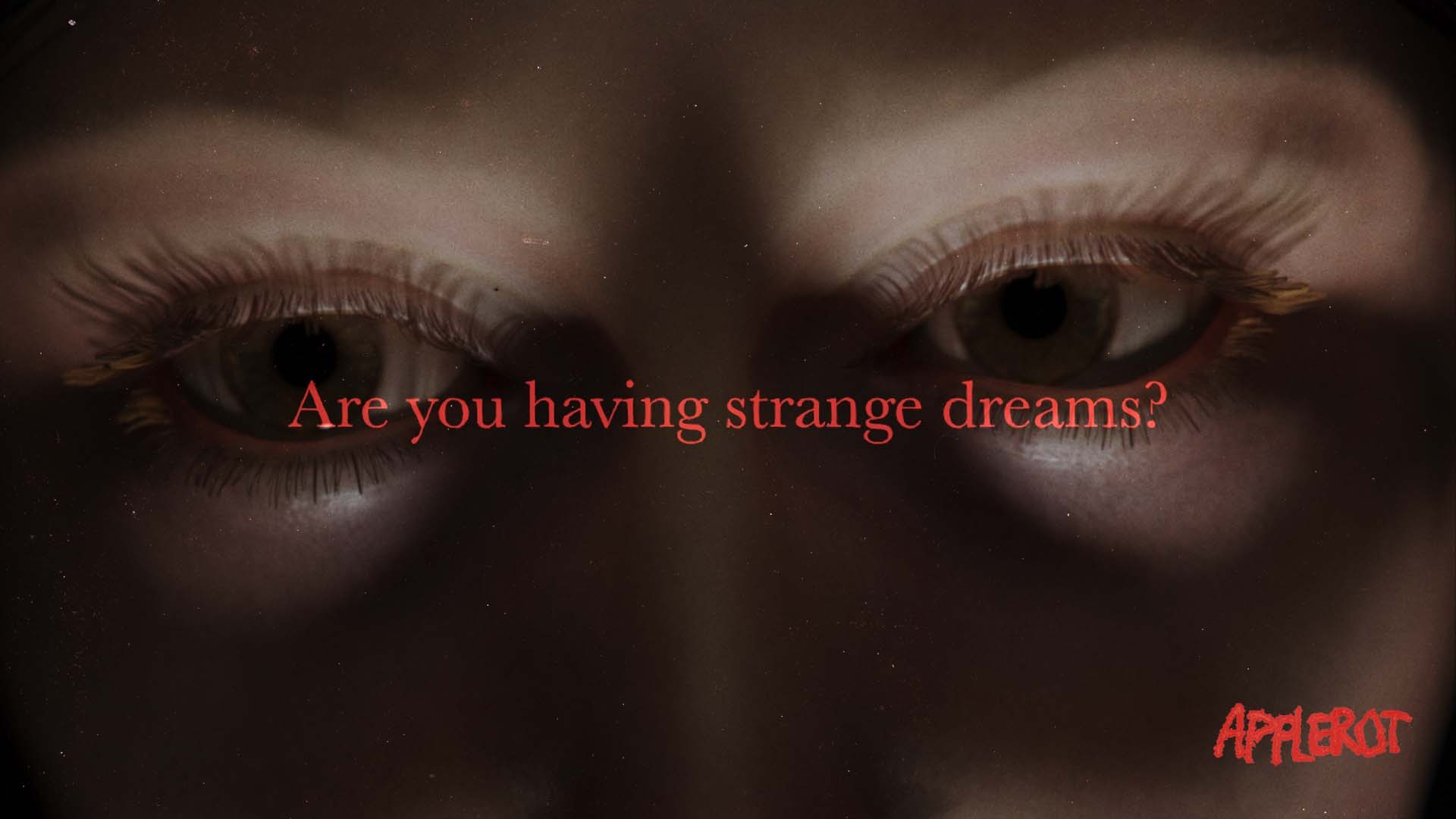
This blog will revisit the design thinking behind our main-girl Eve. What were our goals for her character design, and how did we (or did we not) achieve them?
While this post explores the 'Why' and the design thinking behind Eve’s character, you can find the Technical 3D Pipeline breakdown here.
Translating a Nightmare into a Protagonist
Apple Rot all started from a bad dream. Actually, everything which’d happened in Leo’s dream, ended up in the film, one to one. In the dream there was a girlfriend, too. We ended up calling her Eve.
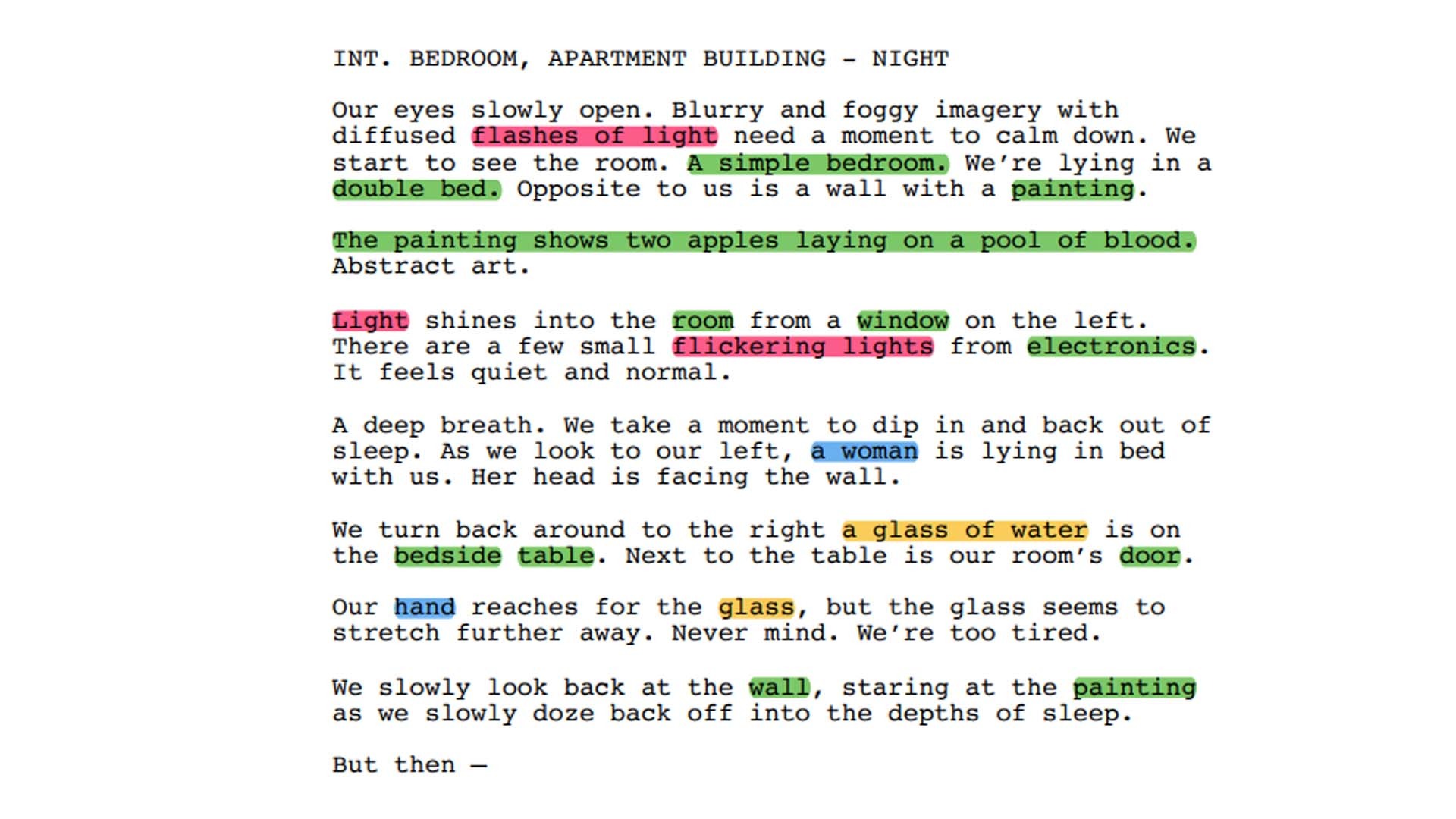
The biblical reference of her name is intentional. Eve is the first human to bite into the forbidden fruit, inviting demons into her life. Eve was seduced by the Genesis Orchard, with their red, shiny apples.
When was the last time a company successfully seduced you to bring something into your home? Something you didn’t actually need, or didn’t even want, perhaps? Have you ever considered the consequences of those decisions?
Eve doesn’t have the consciousness anymore to consider the consequences of bringing the Genesis Orchard apples into her home. She’s gone. Possessed by the Rot. The only thing on her mind right now, is to consume more and more and more.
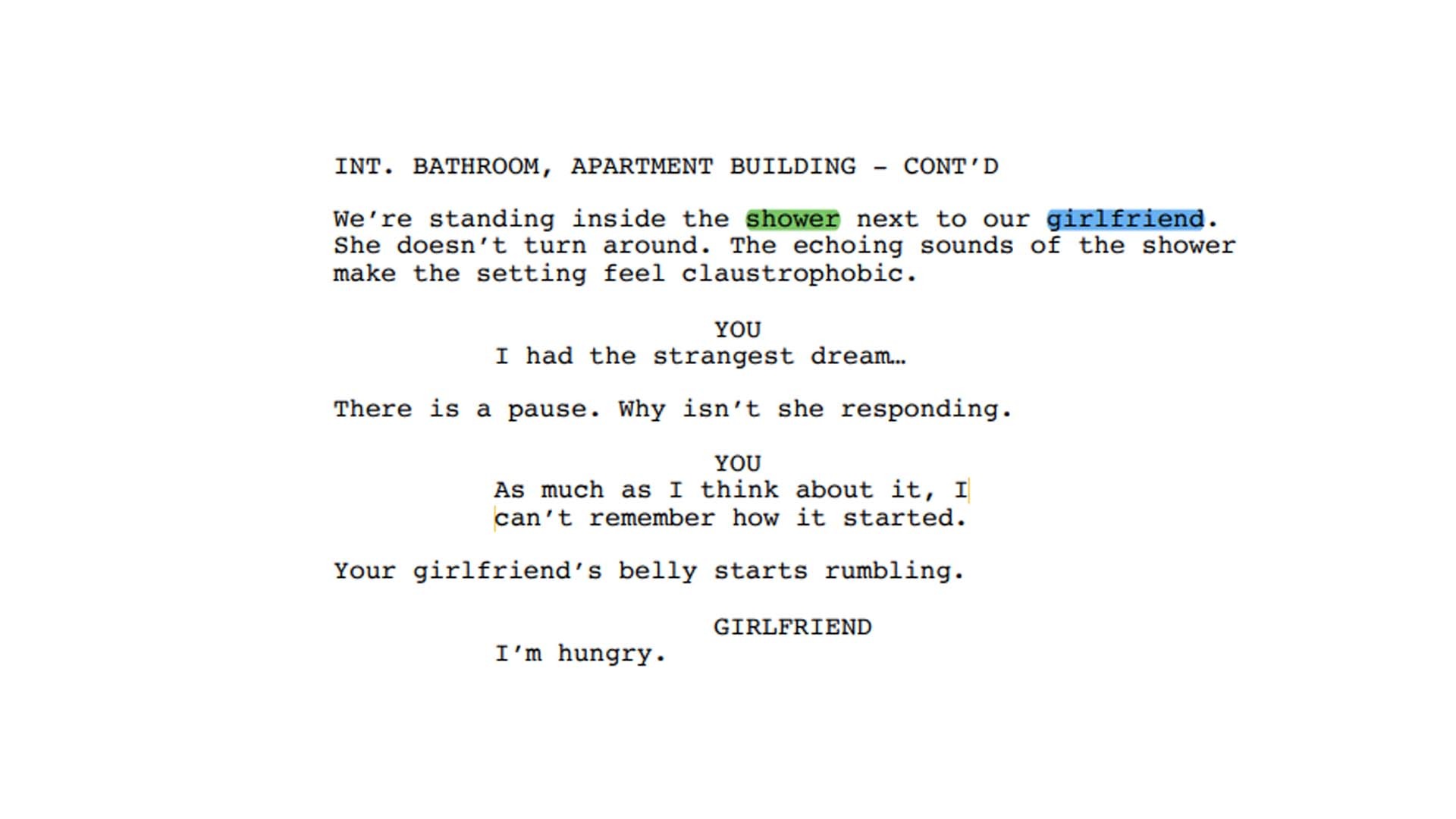
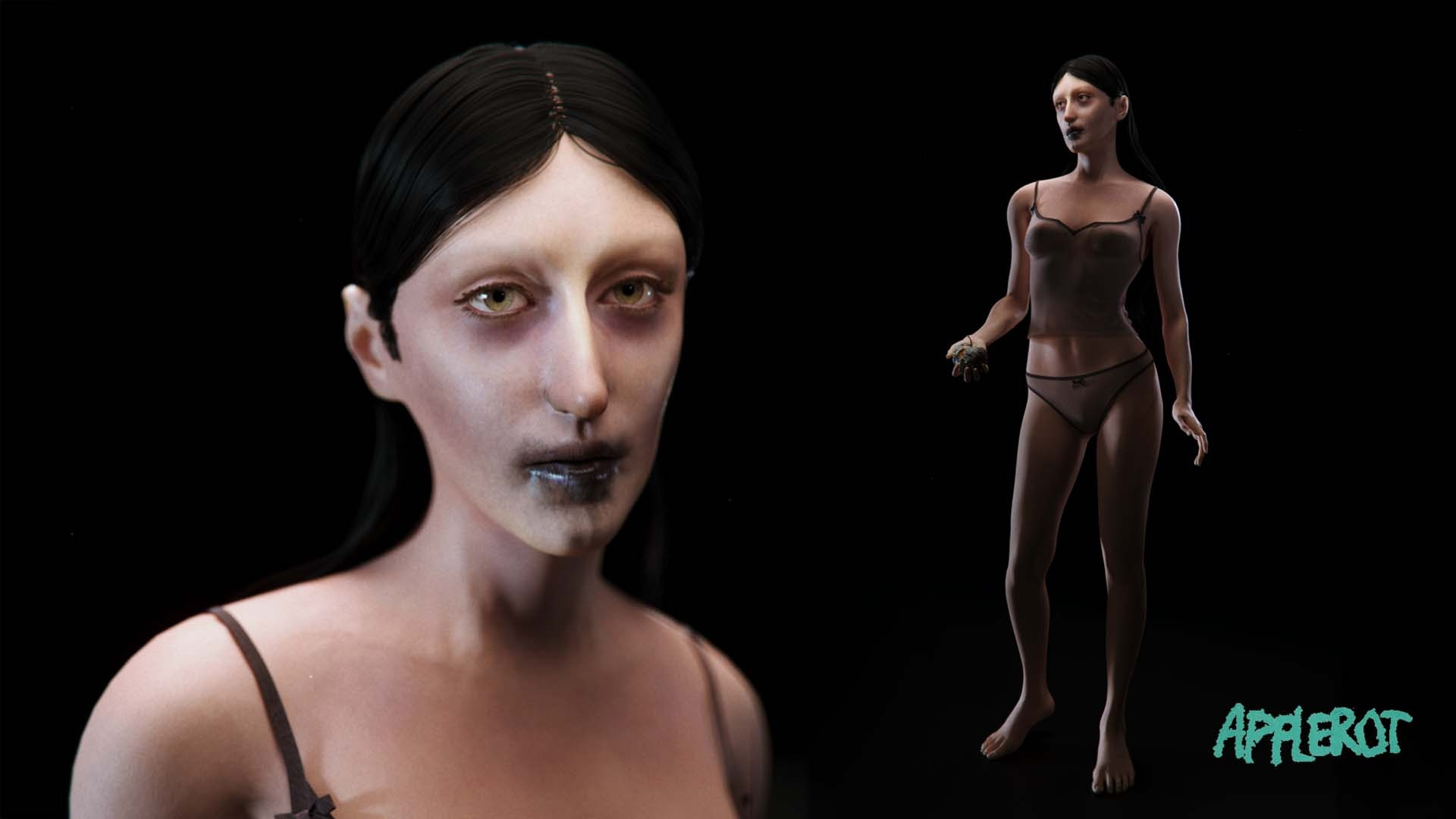
In the script, Eve isn’t given any physical attributes. She is You’s girlfriend, and has started to act rather odd as of lately. It was Charlotte’s task as the Character and Costume Designer to give this character the face and body that’d serve the story.
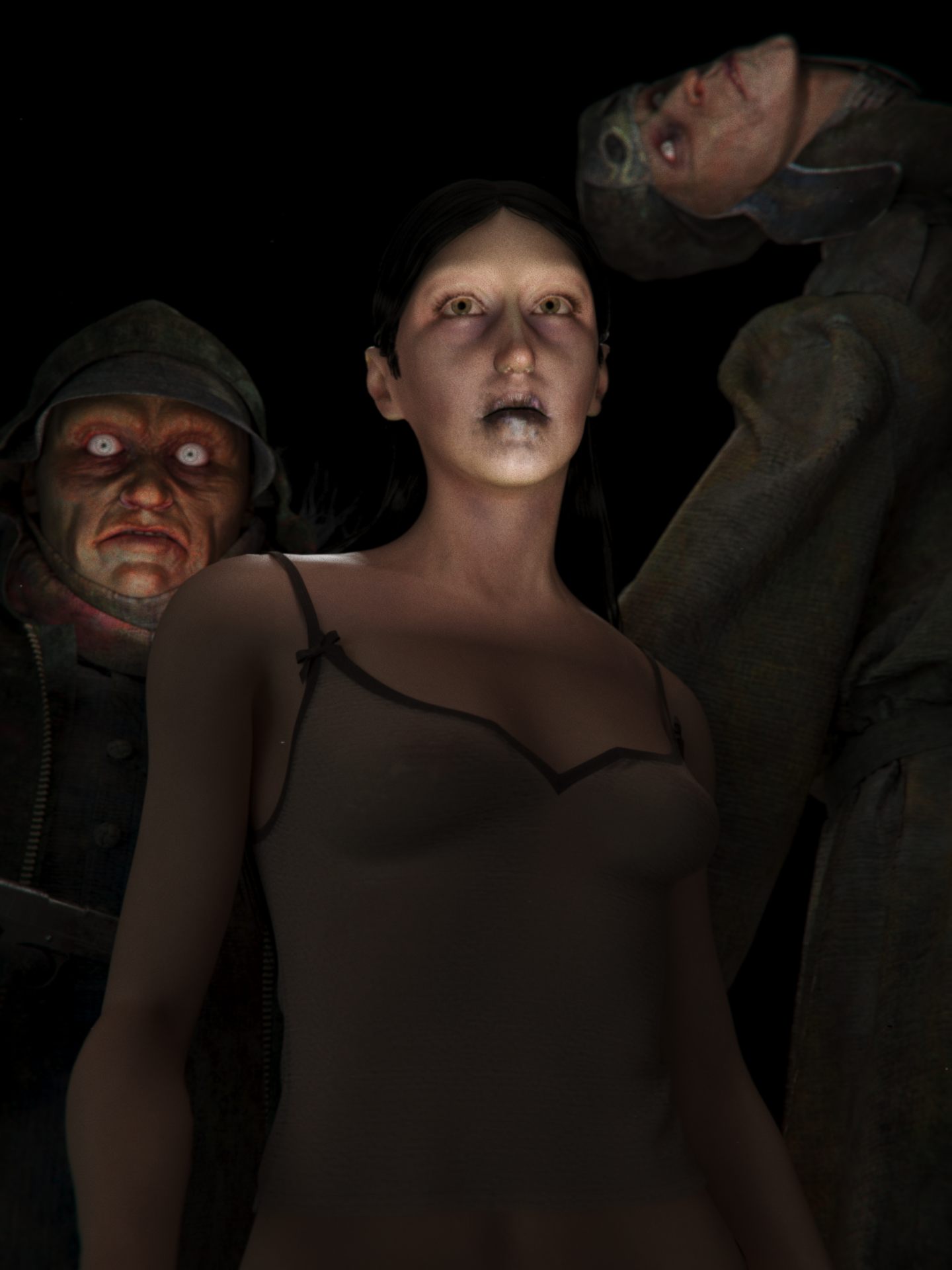
Eve’s character design is defined by contrast; though she occupies the role of a companion, she is no longer capable of radiating love or human warmth. She’s cold, distant, emotionless and sickly.
But making Eve monstrous or entirely un-canny wouldn’t be right either. She should remain relatively attractive; girlfriend-material, so-to-say. But something has to be off. Something about her should be unsettling and off-putting.
Defining the Visual Language
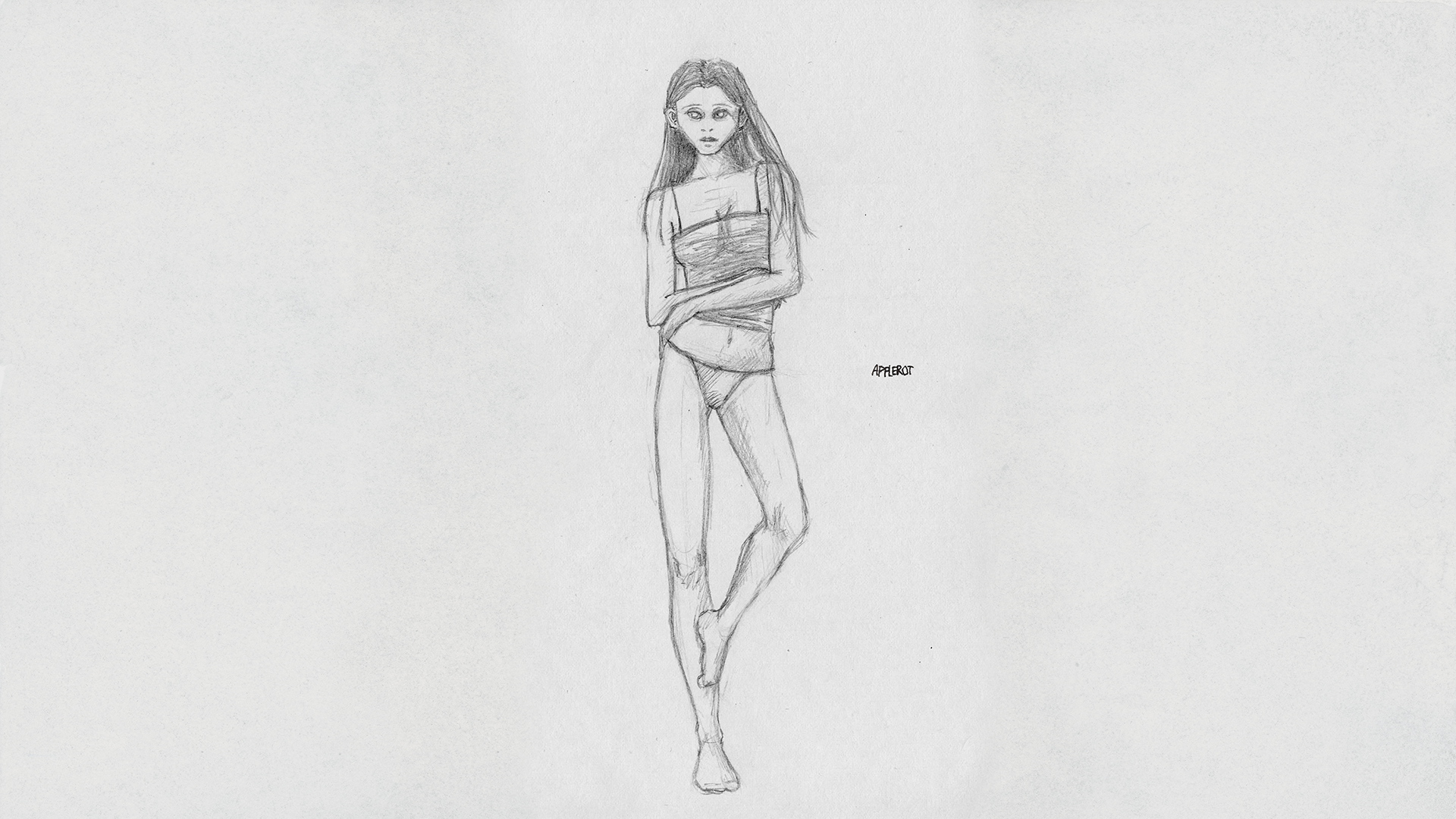
Early designs for Eve focus on this sickly, uncanny, but attractive look. Though early sketches remained uncoloured, an ashy complexion and black hair were design focal-points from the very beginning; heavily inspired by the iconic Isabelle Adjani in Possession and Nosferatu the Vampyre.
To us, Adjani’s characters embody the image of a young, attractive woman whose dark interior world overtakes her beauty. The friction between beauty and the un-canny is a powerful juxtaposition, and a story device as old as time.

Just like the Genesis Orchard apples, Eve’s attractive appearance masks her true self; her rotten mind. In her design the disgusting is removed from the horrific. We are left with something which we want to find lovely, but are ultimately put-off by.
The Evolution of Eve’s Aesthetic
During the concept art phase, we held on to a couple of key characteristics: long straight dark hair, a malnourished complexion and glazed-over eyes.
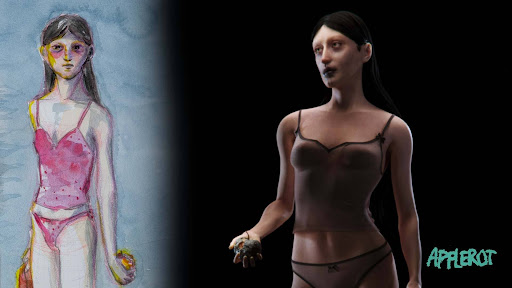
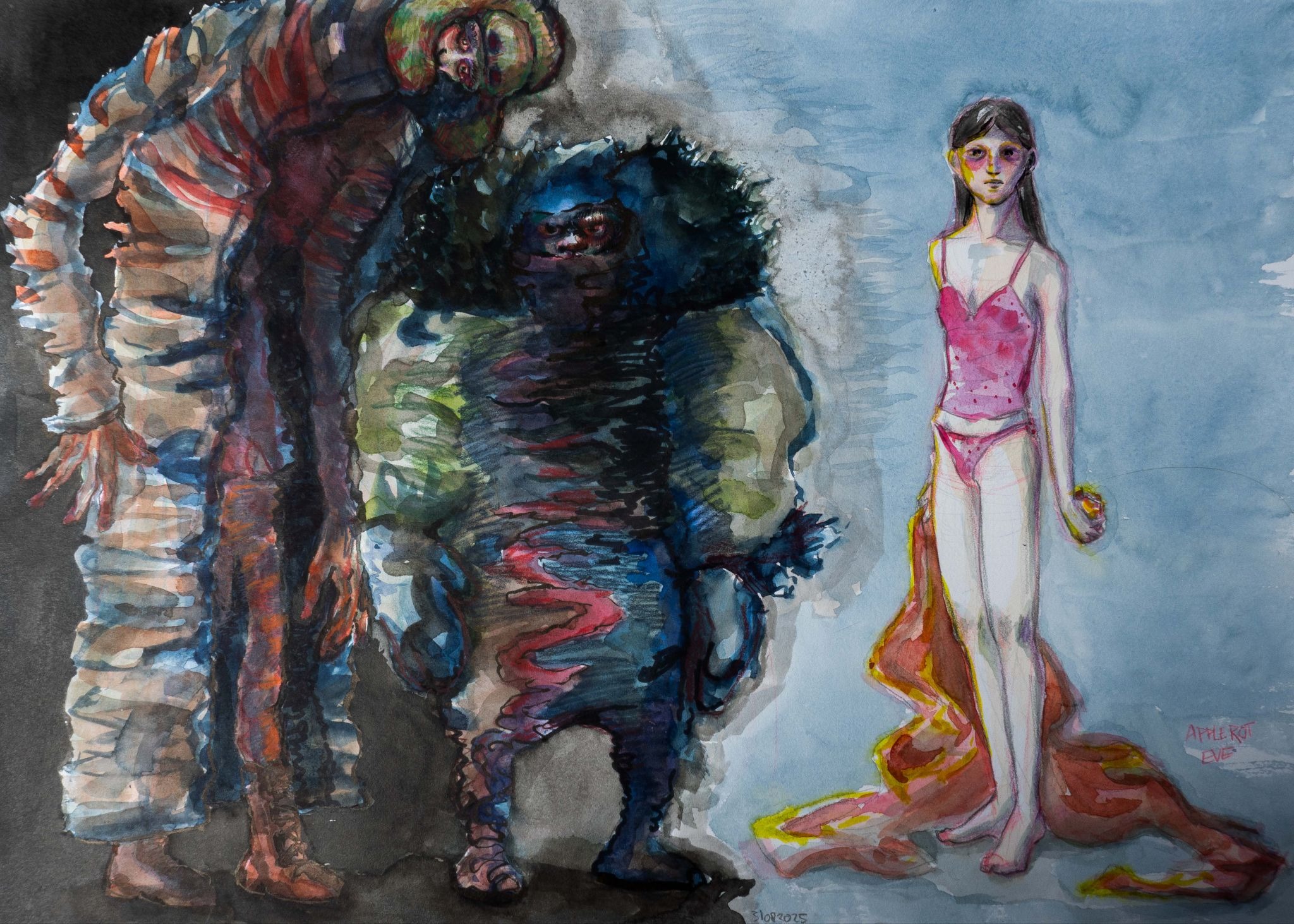
Concept Artist Ab Wienk painted her wearing a set of white briefs and tanktop, after Charlotte’s initial ideas of dressing her in something revealing and vulnerable. His version of the character explores a more haunted side of her.

After taking the design digital, Eve quickly ended up wearing a light-pink version of the tanktop and briefs set. Whereas the first renditions of her costume were made in a shade of baby pink, the final design moved to something more of a flesh colour.
We felt like the design of the set referenced a youthful innocence, accentuated by the bows and pink colour. The flesh colour of the semi-transparent material heightens her vulnerability.

As for Eve’s face, it was very important to strike this balance between pretty and uncanny. The main points of her face are her round full lips, sunken cheeks and extremely wide eye-sockets. Her look was achieved by tweaking the details and making sure her bone-structure stands out in various lighting conditions.
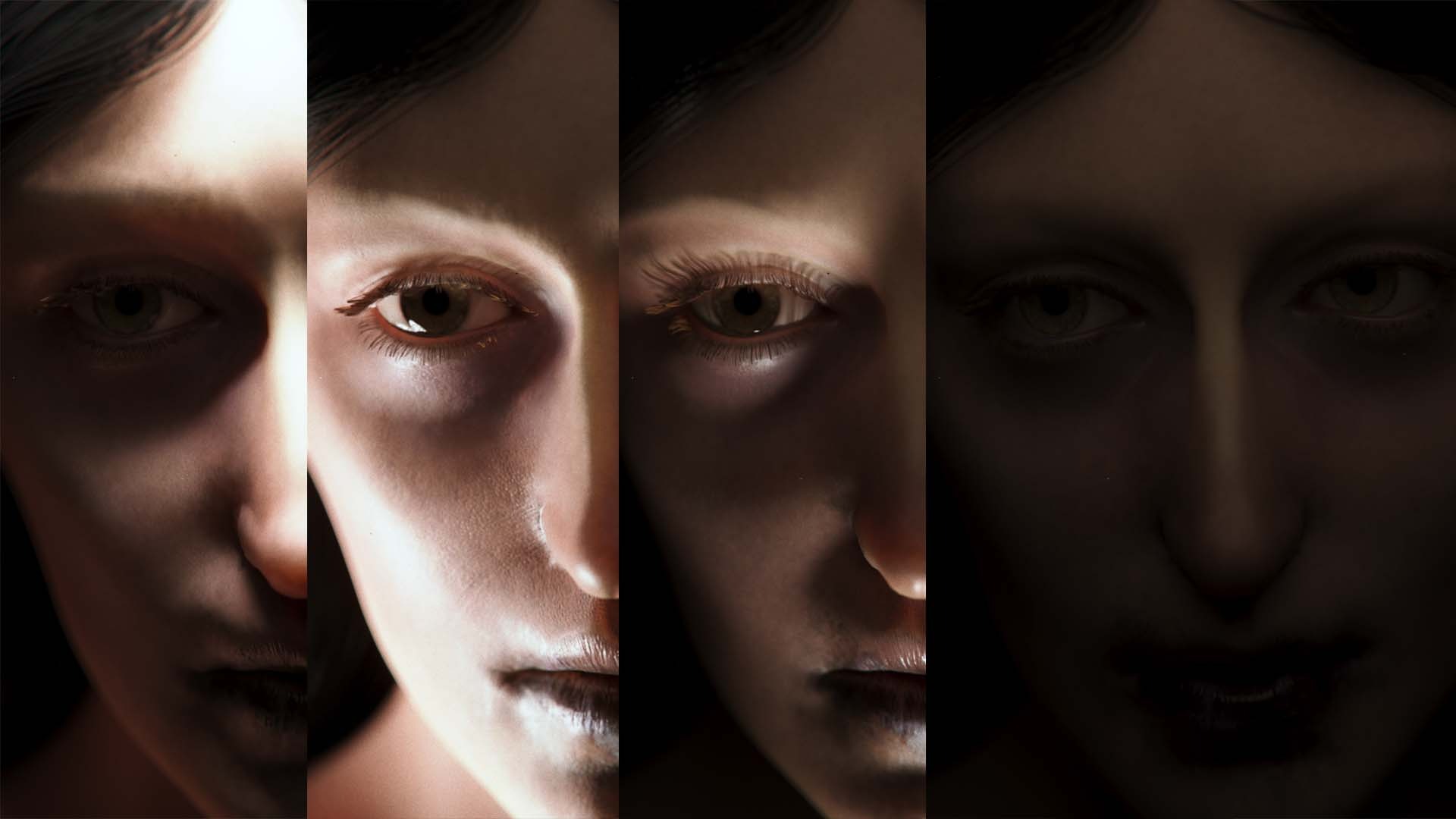
Much of Eve isn’t even visible in the film. She only wears clothes in 1 out of the 3 scenes she appears in and, apart from her lips, her face is never shown. Though despite the tight production schedule, we still committed to crafting the invisible work (within rhyme and reason, of course).
In the final scene, Eve eating the apple, we ran into a problem we couldn’t solve within time.
She was supposed to eat the apple, giving us a gross visual of spit mixing with apple and mold.
This idea was out of scope, at that moment.This constraint forced a creative pivot. We decided to make a mysterious, black substance seep from her lips. It ended up being another key element of her possessed look.

Conclusion: The Short Film
Creating Eve, from script to an animated character, was a collaborative effort between all team members. Cheesy, but it’s the truth. Everyone’s involvement added a layer of complexity and authenticity to Eve’s character design. This depth is very much needed for a character such as Eve, whose design is rather simple and even stereotypical. I believe we managed to shape Eve into a character easy to understand for audiences, without looking over-done.
Again, an in-depth technical breakdown of Eve’s 3D-animation-ready character can be found here.
For everyone else who wants to experience the result of this creative journey: stream Apple Rot, for free, right here.
Reading List
References






%20by%20Ivan%20Aivazovsky.jpg)




0 Comments